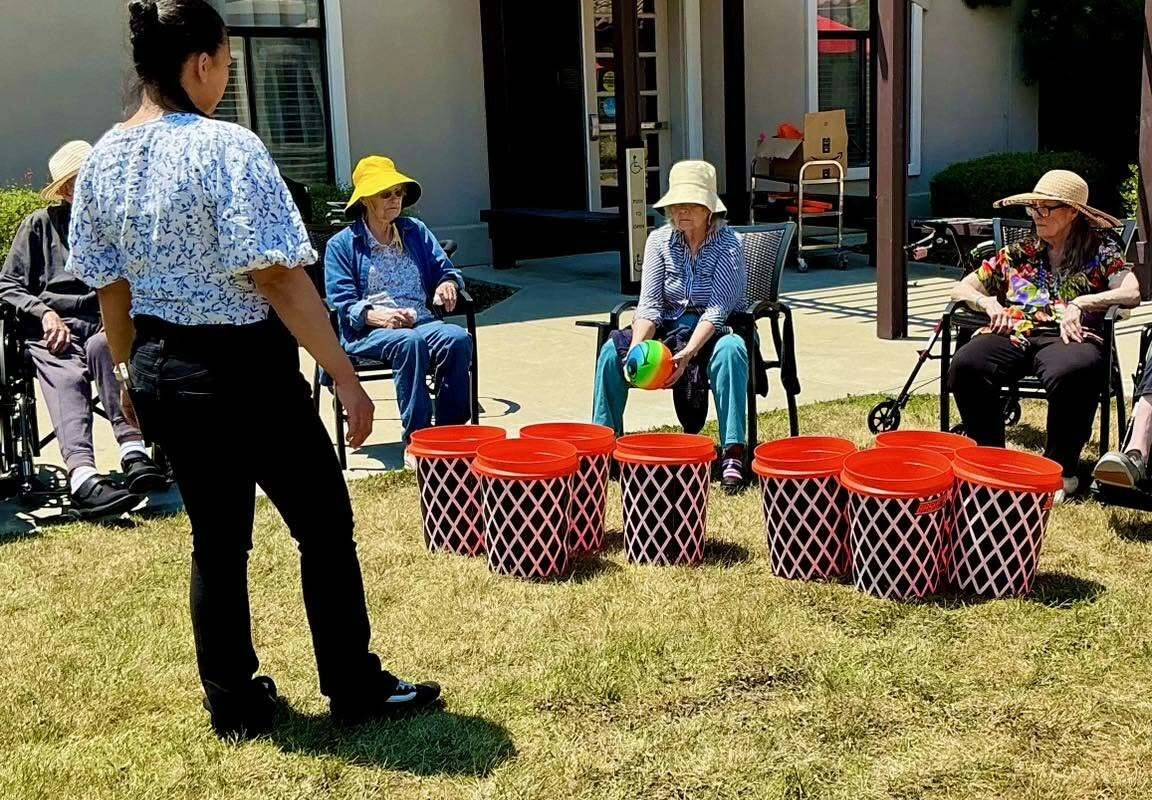
A memory care lifestyle program is the structured daily schedule of therapeutic activities, sensory experiences, social programming, and purpose-driven engagement that shapes a resident’s quality of life beyond physical care. The strongest programs are built around each resident’s life history and interests, not a generic calendar. A study in JAMA Network Open found that seniors who regularly participated in enriching activities showed significantly stronger cognitive resilience over time.
Most families touring memory care communities evaluate the building first. The rooms. The dining space. The outdoor areas.
What predicts daily quality of life more reliably than any of those features is a simpler question: what do residents actually do here, every day, and is it built around who they are?
A strong memory care lifestyle program is not a schedule printed on paper. It is the evidence that a community knows its residents.
Key Takeaways
- A 2023 study in JAMA Network Open found that seniors who regularly participated in enriching activities were less likely to develop dementia and showed stronger cognitive resilience over time.
- The strongest memory care lifestyle programs are built around each resident’s individual life story, not a standardized calendar applied to everyone equally.
- Sensory programming, including bird watching, cooking, and animal-assisted engagement, supports emotional regulation and reduces dementia-related agitation in ways that passive activities cannot.
- A strong lifestyle program is one of the clearest indicators that a community practices rather than merely describes the Best Friends Approach to memory care.
- At Carefield Pleasanton, the program includes the monthly Chef’s Table Series, monthly Decade Galas, an indoor aviary with Gouldian Finches, outdoor movement, and a growing roster of animal-assisted visits through Connected Horse and community partners.
Why the Lifestyle Program Predicts Quality of Daily Life
A memory care community’s lifestyle program is the primary delivery vehicle for the cognitive and emotional engagement that research consistently links to better dementia outcomes. Physical care addresses safety and basic daily needs. The lifestyle program addresses what daily life actually feels like.
A 2023 study published in JAMA Network Open followed more than 10,000 seniors and found that those who regularly participated in enriching activities were significantly less likely to develop dementia and showed stronger cognitive resilience over time. Consistent engagement, the study found, helped sustain the neural pathways that isolation and inactivity allow to weaken.
The Alzheimer’s Association Daily Care Plan recommends structuring activities around the times when a person with dementia functions best, tailored to their individual history and interests. A community that does this well has built its program around who its residents actually are. One that does not has a generic calendar.
That difference is felt within days of move-in, and it is one of the most reliable indicators of the quality of care a community provides.
What Separates a Strong Memory Care Program from a Weak One
A strong memory care lifestyle program adapts to the individual; a weak one runs the same schedule for everyone. Families evaluating communities can identify the difference with a small number of direct questions.
| Strong Program | Weak Program |
| Activities tailored to each resident’s life history | Same activities for all residents regardless of background |
| Sensory engagement is built into the weekly schedule | Passive activities (TV, observation) as primary programming |
| Consistent daily rhythm with named recurring programs | One-off events without predictable structure |
| Staff who can describe what specific residents enjoy | Generic answers about “a variety of activities” |
| Programming runs as scheduled on ordinary weekdays | Activities cluster around holidays and special events |
| Outdoor and sensory access built into daily routine | Outdoor access is rarely offered or left unstructured |
What to ask on a tour:
- What did residents do last Tuesday, not last month’s holiday event?
- Can you describe what a specific resident in your program most enjoys?
- How often does your activity calendar actually run as posted?
- How is programming adapted for residents with limited mobility or verbal communication?
A community confident in its program will answer the first question with specifics. One that redirects to a brochure is telling you something important.
How Different Activity Types Address Different Dementia Symptoms
Different types of programming address different dementia symptoms, and a strong lifestyle program includes all of them. Families should evaluate whether a community’s calendar covers each dimension, not just whether activities exist.
Sensory Activities
Sensory engagement, including bird watching, and animal-assisted activities, is particularly effective at reducing agitation and anxiety in people with dementia. When Carefield Pleasanton recently welcomed a herd of miniature horses to visit, residents who rarely settle for long sat calmly for most of the hour, drawn in by something as simple as a soft muzzle and a warm coat. The movement, color, and unpredictable sounds of live birds require a kind of present-moment attention that grounds residents experiencing confusion and restlessness. These are not decorative program elements. They are clinical tools.
Reminiscence and Life Story Programming
Reminiscence therapy uses music, objects, images, and stories from a person’s past to activate emotional memory, which dementia tends to preserve even when explicit recall has faded. Monthly themed events built around an era, a decade, or a shared cultural moment connect residents to their personal histories in ways that general conversation often cannot.
Creative and Purposeful Engagement
Art therapy, cooking, and other hands-on creative activities support fine motor skills, provide a sense of accomplishment, and create natural opportunities for social interaction. At a recent Chef’s Table, residents rolling and folding their own lumpia wrappers were doing real physical work with their hands, not just watching someone else cook. For people with dementia, the experience of making something has measurable effects on mood and self-worth that passive activities do not produce.
Social and Intergenerational Programming
Social isolation accelerates cognitive decline in people with dementia. Programming that brings residents together, families into the community, and outside visitors into the daily environment counters that isolation structurally, not just occasionally. This month alone brought a visit from certified miniature horses and their handlers, plus a separate stop from a therapy dog in training: new faces and new energy walking through the door on an otherwise ordinary week. Intergenerational programming in particular tends to produce higher engagement than peer-only activities.
Our article on Art Therapy for Seniors with Dementia covers the research on creative engagement in detail.
What Pleasanton’s Lifestyle Program Actually Looks Like
At Carefield Pleasanton, the lifestyle program is visible in specific, named recurring events built around what residents at this community actually enjoy. Each program below reflects a deliberate programming decision, not a generic activity calendar.
The Chef’s Table Series
Every month, residents participate in the Chef’s Table, cooking something new together. Recent editions have included Josefina’s Lumpia with Sweet and Sour Sauce. Cooking activates familiar sensory memories, builds a sense of purpose and participation, and creates natural social connection around a shared experience. For residents who spent decades preparing food for families and friends, this is not a program. It is a return to something deeply known.
Monthly Decade Galas
Every month so far this year, Carefield Pleasanton has hosted a themed event built around a different decade: music, dancing, period-appropriate food, and the kind of social energy that reminiscence therapy produces when it is done as an experience rather than an exercise. Staff dress for the occasion as much as anyone, and the room fills with the kind of social energy that reminiscence therapy produces when it happens as an experience rather than an exercise.
The Indoor Aviary
Carefield Pleasanton’s indoor aviary, currently home to Gouldian Finches and other exotic birds, is one of the community’s most distinctive features and a consistent daily gathering point. Bird watching is a multi-sensory experience: the movement, the color, the chirping, and the unpredictability of live birds require present-moment attention that is grounding for people managing memory loss. Conversations that are difficult in other settings often flow more naturally here. Residents return to the aviary not because they are directed to but because it draws them back.
Equine and Animal-Assisted Programming
Carefield Pleasanton partners with Connected Horse, a certified non-profit organizationt, for its monthly Barn-at-Home workshop.Sessions use the topic of horse care to practice multi-sensory engagement, non-verbal communication, and social connection, all without requiring residents to find the words. Stretching, sharing, and simple socializing fill the hour, and residents leave more present than when they arrived.
The community’s animal programming has been especially active lately. Debby, the daughter-in-law of a former resident, recently brought her certified miniature horses and volunteers from the non-profit Itty Bitty Healing Hooves to visit, and a therapy dog in training stopped by separately the same month. For residents whose verbal communication has become difficult, an afternoon with a gentle animal meets them in a register that does not require words. The sessions look unusual from the outside. For participants, they work.
Art and Creative Sessions
Art sessions at Carefield Pleasanton produce visible results: residents painting flower fields when summer arrived, filling the community’s common spaces with color and the focused quiet engagement that creative work produces. Our article on Music for Seniors in Memory Care at Pleasanton covers the parallel evidence for music-based engagement in this community.
You can follow Carefield Pleasanton’s programming on Facebook and Instagram to see what happens week to week.
How the Lifestyle Program Connects to Shared Living
A rich daily program creates the shared texture of experience that makes shared rooms in memory care work. This connection is direct and measurable.
Residents who cook together at the Chef’s Table, attend the monthly gala side by side, and visit the aviary at the same time each morning are building a consistent shared experience that feeds directly into the familiarity that shared rooms are designed to support. The lifestyle program creates the daily context. Shared living extends that connection into the overnight hours and the quiet moments between scheduled events.
Our article on shared rooms in memory care covers why shared living produces better outcomes for residents with dementia and how Carefield Pleasanton approaches roommate matching. The lifestyle program and shared living reinforce each other. Both are better when the other is present.
Our article on Pet Therapy in Memory Care covers an additional dimension of this connection: how animal-assisted engagement draws on the same preserved emotional capacities that both the Best Friends Approach and a strong lifestyle program rely on.
Choosing a memory care community that takes its lifestyle programming seriously is choosing a community where your loved one’s days have shape, meaning, and genuine connection.
Choosing professional memory care for a loved one when home caregiving has reached its limits is a responsible decision, not a failure. The team at Carefield Pleasanton welcomes families who want to see the program in action rather than read about it. Come visit and stay for the monthly Chef’s Table.
Frequently Asked Questions
What is a memory care lifestyle program?
A memory care lifestyle program is the structured schedule of therapeutic activities, social events, sensory experiences, and purposeful engagement that shapes a resident’s daily life beyond physical care. It encompasses cooking programs, music and art therapy, reminiscence events, sensory activities like outdoor exercise or bird watching, and intergenerational programming. The quality of the lifestyle program is one of the most reliable predictors of how residents experience daily life, not just how safe or physically comfortable they are.
What types of activities should a memory care lifestyle program include?
A strong memory care lifestyle program includes sensory activities, creative engagement, physical movement, social programming, and life story-based activities tailored to individual residents. Specifically, cooking, music, art therapy, reminiscence therapy, animal-assisted engagement, and intergenerational events all have research support for their effects on dementia symptoms, including agitation, anxiety, and social isolation. The strongest programs adapt these categories to each resident’s personal history rather than delivering a uniform calendar.
How do I evaluate a memory care community’s lifestyle program?
Ask what residents did last Tuesday, not last month’s holiday. Ask whether staff can describe what a specific resident most enjoys. Ask how often the posted activity calendar actually runs as scheduled. Then ask staff to describe one recent activity that residents responded to particularly well. Their answer and how they give it reveals whether the program is a living practice or a document. Communities confident in their programming will answer with specific names, dates, and outcomes.
How does lifestyle programming connect to dementia outcomes?
A 2023 study published in JAMA Network Open found that seniors who regularly participated in enriching activities were significantly less likely to develop dementia and showed stronger cognitive resilience over time. The Alzheimer’s Association identifies structured, routine-based programming as one of the most effective non-pharmacological strategies for reducing agitation and supporting daily function in people with dementia. A strong lifestyle program delivers that engagement consistently, not occasionally.
How does lifestyle programming support shared room living?
Residents who share a room benefit from the shared texture of daily experience that a strong lifestyle program creates. Cooking together, attending monthly events together, visiting the aviary at the same time, and participating in the same creative sessions builds a consistent shared context that extends naturally into the familiarity and connection that shared living is designed to support. The lifestyle program and shared rooms reinforce each other: the program creates the daily structure, and shared living sustains that connection through the hours between scheduled activities.