Life in assisted living is structured, social, and significantly more active than most families expect. Residents receive help with daily tasks like medications, meals, and personal care, while spending the rest of their time choosing how to fill their days: fitness classes, creative arts, group outings, shared meals, and the kind of daily connection that isolated home living rarely provides.
Most families ask the wrong question when they start researching assisted living. They ask how much it costs and whether their parent qualifies. Both matter. But the question that tells them whether it will actually work is simpler: what does Tuesday look like?
Not a holiday event. Not a special occasion. An ordinary Tuesday in the middle of an ordinary month, for someone who moved in six months ago and has found their footing.
What is life like in assisted living? The most honest answer is: fuller than most families imagine. More than that, assisted living is a more enjoyable option for most people than waiting for a crisis to decide for them.
Key Takeaways
- A 2024 study published in Nursing Open via PMC found that social engagement, personalized care, and a sense of safety were the strongest predictors of quality of life in assisted living communities.
- A 2025 U.S. News survey found that among seniors who reported loneliness and isolation before their move, assisted living consistently helped them maintain or improve health and find enjoyment and meaning in daily life.
- Life in assisted living at Park Visalia includes access to a private park, daily programming, a weekly art class with a world-renowned local artist, community outings, and a team that has been together long enough to know each resident by name, preference, and daily rhythm.
- Park Visalia has been recognized by U.S. News & World Report as one of the Best in Senior Living, based on resident and family satisfaction data collected from hundreds of survey responses.
- Families who move a loved one early, while they are still physically active and cognitively present, consistently report shorter adjustment periods and a meaningfully different daily quality of life.
What Does Daily Life in Assisted Living Actually Look Like?
Daily life in assisted living is defined by choice, support, and consistent human connection, three things that become increasingly difficult to maintain at home as care needs grow. Residents are not managed on a schedule. They choose how to fill their days, with the infrastructure of daily care handled around them.
Mornings
Most assisted living communities begin the day with personal care support for those who need it, breakfast in a communal dining room, and the first scheduled activities of the morning. For a resident at Park Visalia, that might mean getting dressed with help if needed, heading to the dining room with its fresh ingredients and daily specials, and spending the late morning in the courtyard, at the fitness room, or visiting the salon.
The dining experience at Park Visalia is not institutional. Meals are prepared from fresh ingredients and served three times a day in a dining room designed for comfort and conversation. Residents select from a daily special or a familiar menu they have come to know. That consistency, the same kitchen, the same familiar faces at breakfast, the same options each morning, is one of the things residents most consistently name as grounding.
Afternoons
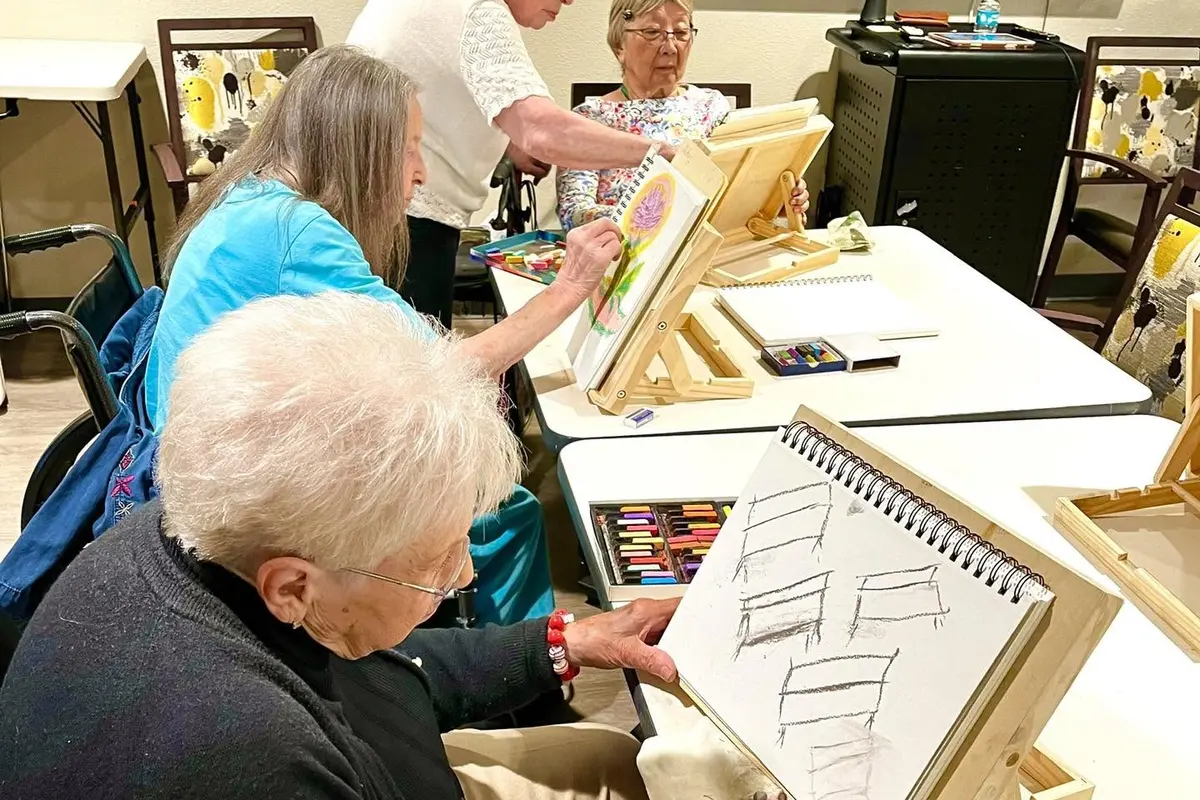
Afternoons in assisted living at Park Visalia are where the community’s programming distinguishes itself from a generic schedule. For example, every friday residents might attend an expressionist art class led by Abby, a world-renowned local artist who brings her expertise directly to the community. The class is open to any resident who wants to participate, whether they have painted for decades or are picking up a brush for the first time.
Art-making floods the brain with dopamine, serotonin, and endorphins. It strengthens neural connections, fosters a sense of accomplishment, and creates natural social bonding around a shared creative experience. But more than any clinical description, what happens in that Friday class is exactly what most families are searching for when they start looking at assisted living: their loved one, doing something they love or something brand new, surrounded by people sharing in the experience.
Other afternoons bring Bingo, where families often join in alongside residents. Group outings. Seasonal crafts, like our recent the mason jar summer vases for spring. And the occasional visit from a community partner like , who brings new prizes and a fresh energy to a familiar game.
Evenings
Evenings in assisted living are quieter by design, offering the stillness that residents need after a socially full day. Park Visalia’s movie room, with its intimate setting and comfortable seating, draws residents who want to watch a film together. Quiet rooms and library nooks are available for the residents who prefer a book and a few hours of their own company. The evening staff is available throughout the night.
For families who used to spend their evenings checking in, worrying, and managing, the experience of a genuinely relaxed evening call, rather than an anxious one, is one of the most unexpected changes of the first few months.
The People Who Make a Community Feel Like Home
What is life like in assisted living is ultimately answered by the people, not the amenities. At Park Visalia, long-tenured staff are one of the community’s most consistent quality signals.
Vilay, from the housekeeping team, has been with Park Visalia for eight years. She was celebrated as Employee of the Month in June 2025, recognized as dedicated, dependable, and hard-working. She is one of many staff members who have been with the community long enough to know residents as individuals, not assignments.
When the same person has been making the same rounds through the same building for eight years, they notice things. They notice when someone seems quieter than usual on a Thursday. They know which resident likes their room a specific way. They are part of the daily fabric that makes a place feel like home rather than a service.
That consistency is what the U.S. News & World Report Best Senior Living recognition reflects. The rating is based on resident and family survey data, not marketing materials. Families who live alongside this community every day gave it that rating.
Our article on Joyful Living: Indoor Activities for Seniors at Park Visalia goes deeper into the specific activities and programming that shape the daily experience here.
What the Visalia Location Adds to Daily Life
Visalia’s identity as the Gateway to the Sequoias is not just a tagline — it shapes what daily life looks like for residents who grew up in and around the Central Valley. The San Joaquin Valley surrounds the community with farm-fresh cuisine, agricultural heritage, and a slower, community-centered pace that makes the transition from home to assisted living feel less like a departure.
Park Visalia’s private park is a genuine outdoor environment, a great place for activities, family/community events, or group outings with supervision. Residents walk the paths, sit in the courtyard for al fresco dining, and garden at wheelchair-accessible garden beds. For longtime Visalia residents, the community is familiar in a way that a move to a different city would not be. The same region. The same landscape. Many of the same community events.
The community maintains connections throughout Visalia that residents experience directly. The Memorial Day Veteran celebration, held in partnership with local organizations like Senior Helpers, brings the wider community into the park for an afternoon of food, gifts, and shared stories. More recently, the Father’s Day Hot Dogs and Cold Beer event invites families in. The Visalia Rawhide booth, where staff and families connect over a baseball game, is one of those community touchpoints that reminds everyone that Park Visalia is not separate from Visalia. It is part of it.
What Life Looks Like When You Move Earlier Rather Than Later
What is life like in assisted living looks meaningfully different for someone who moved in at the assisted living stage compared to someone who moved in after a crisis. This is one of the most important and least-discussed dimensions of the question.
A person who moves to Park Visalia while still physically active, cognitively present, and able to make their own choices arrives differently. They tour the community before their first day. They choose their room. They sit in the Friday art class in their first week and decide whether they like it. They make a friend at the Bingo table before the end of their first month.
A person who arrives after a fall, a hospitalization, or a cognitive crisis comes in under hardship, making the adjustment harder. The adjustment is harder. The world of the community takes longer to become familiar. The first few months are more disorienting.
The difference is not only the community or not just the community. It is the timing.
Our article on the benefits of moving to assisted living early covers this in full, including what the research shows about adjustment outcomes at different stages. The Life-Changing Benefits of Assisted Living for Seniors in Visalia covers the longer-term picture of what residents and families consistently find after the first year.
Families who move a loved one to Park Visalia before urgency makes the decision for them often find their loved one adjusts faster than they expect. The family dynamic also improves. The relationship changed for the better. They visit as family now, not as caregivers managing every detail of a complicated daily situation.
Choosing professional care for a loved one when home caregiving has reached its limits is a responsible decision, not a failure. Communities like Park Visalia have staffing, training, and environments that one family member cannot replicate alone. Families who make this decision early, rather than waiting for a crisis, almost always say they wish they had done it sooner.
The team at Park Visalia welcomes families who want to see what Tuesday actually looks like here. Contact us to schedule a visit or just talk through where you are in the process.
Frequently Asked Questions
What is life like in assisted living on a typical day?
A typical day in assisted living includes personal care support in the morning if needed, communal meals three times a day, a mix of structured activities and free time in the afternoon, and a quieter evening with options for social or solitary time. At Park Visalia, that programming includes art classes, fitness sessions, group outings, and games, alongside access to the community’s private park, library nooks, and movie room. Residents choose how to fill their time. The support is there when needed and unobtrusive when not.
Will my parent be lonely in assisted living?
Assisted living is structured specifically to prevent isolation. Communal dining, daily activity programming, and shared common spaces create regular peer interaction that home living often does not provide. A 2025 U.S. News survey found that among seniors who reported loneliness before their move, assisted living consistently helped them maintain or improve health and find meaning and enjoyment in daily life. At Park Visalia, the combination of a stable long-tenured team and an active daily calendar means most residents are more socially engaged than they were at home.
How do residents spend their free time in assisted living?
Residents in assisted living have genuine freedom in how they spend unscheduled time. At Park Visalia, that includes the private park and courtyard, a fitness room, the classic movie room, quiet reading nooks, and a salon. A weekly art class with a community artist, regular Bingo sessions, seasonal craft projects, and community outings provide structured options for those who want them. Residents who prefer more quiet time have spaces designed for exactly that.
Does life in assisted living get better over time?
Yes, consistently. The adjustment period is real, and the first weeks can involve disorientation and some grief. What research and community experience both show is that as residents build familiarity with their environment and form relationships with staff and fellow residents, daily quality of life improves measurably. A 2024 study published in Nursing Open found that social engagement, sense of safety, and personalized care were the strongest predictors of quality of life in assisted living. All three develop over time and accelerate when a resident arrives before a crisis has depleted their capacity to acclimate.