
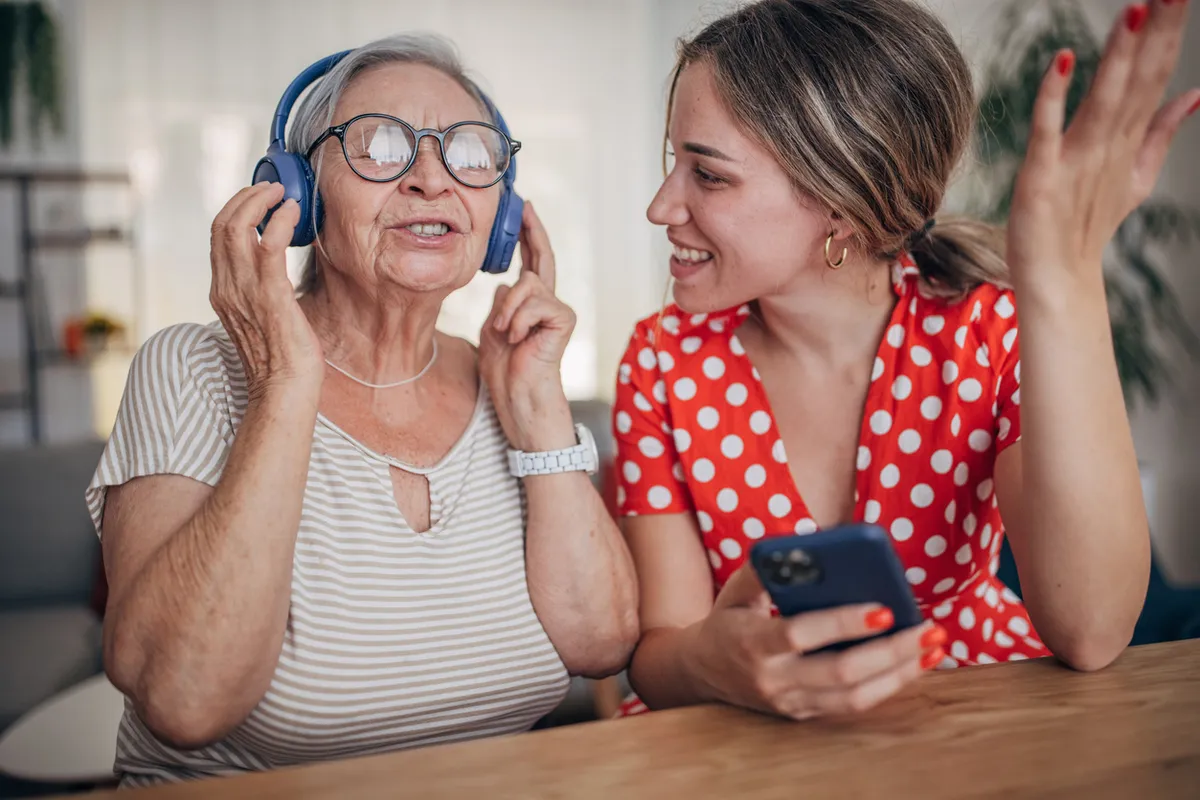
A music playlist for dementia care isn’t just a nice idea; it can be one of the most powerful tools a caregiver has. Music taps into a part of the brain that often stays active, even as other forms of communication fade. A well-chosen song can bring back a memory, ease anxiety, or help someone feel more like themselves.
At Carefield Pleasanton, we use music every day in our memory care programs. And we often hear from families who want to use music during visits or at home but don’t know where to start.
This guide is for you. It’s not about making the “perfect” playlist; it’s about creating something meaningful and familiar for someone you love.
Why Music Works for People with Dementia
As dementia progresses, language and short-term memory often become harder to access. But musical memory, the part of the brain that stores songs and melodies, tends to stick around much longer.
That’s why a person might not remember names or dates but still sing along to a song from their teenage years. Music reaches emotions quickly and without pressure. It can reduce agitation, help with transitions, and create calm, even when words don’t land the same way.
Build a Personalized Music Playlist for your Loved One
Step 1: Start with Their Life Story
Think about your loved one’s age, background, and preferences. Most people form their strongest emotional connection to music between the ages of 15 and 25, so that’s a good place to begin.
Ask yourself:
- What kind of music did they listen to growing up?
- Were there songs tied to a first job, school, or a favorite hobby?
- Did they have favorite artists, genres, or radio stations?
- What music is played during holidays or family events?
It helps to write this down. Talk to other family members or friends who knew them earlier in life; they might remember songs you don’t.
Step 2: Focus on Songs That Spark Emotion
You’re not looking for popular music just because it’s recognizable. You’re looking for songs that feel personal.
Examples might include:
- A wedding song
- A lullaby they used to sing to children
- Church hymns or spiritual songs
- Songs from their favorite movies or musicals
- Songs that reflect their culture or heritage
Don’t worry about how well-known the songs are. You’re looking for emotional memory, not hits.
Step 3: Avoid Overstimulation
Some songs may be too fast, loud, or confusing, especially for people in moderate to late-stage dementia. It’s better to choose music with a steady, slow rhythm and clear melody.
Avoid:
- Songs with jarring or sudden volume changes
- Fast-paced lyrics or chaotic instrumentation
- Songs associated with past trauma or loss (if known)
Watch for any reactions. If a song seems to cause distress, skip it. If it calms or brings joy, make a note of it.
Step 4: Organize Playlists by Mood or Time of Day
People with dementia often do best with a predictable rhythm to their day. You can match music to that rhythm to support how they’re feeling.
Examples:
- Morning: Upbeat, positive songs to start the day
- Afternoon: Familiar tunes or favorite hits
- Evening: Calming instrumental music or slow ballads
- During care routines: Repetitive, comforting songs
Use simple tools like Spotify, YouTube, Apple Music, or even a USB playlist in a portable speaker. Make sure the device is easy to use and won’t interrupt the moment with ads or complex menus.
Step 5: Play It Together
Music becomes more powerful when shared. Sit beside your loved one, hold their hand, and let them move or sway to the music. Sing along if they can, or if you can.
Even if they don’t respond immediately, they might feel it more than you realize. A tapping foot, a smile, or even a peaceful sigh can be a strong sign that the music is reaching them.
And sometimes, just sitting quietly with music in the background helps create a sense of safety and calm.
What If You’re Not Sure What They Like?
It’s okay to experiment. Try short samples from different eras or genres and watch how they respond.
Here are a few starting points that often work well:
- 1940s–1960s classics (Frank Sinatra, Nat King Cole, The Beatles)
- Motown or folk songs
- Soft instrumental or piano tracks
- Religious hymns or gospel music
- Nature sounds with light music in the background
Pay attention to how their bodies respond: Do they relax? Engage more? Become more alert? That’s your signal to keep going in that direction.
Bonus Tip: Add Photos or Personal Items
During listening sessions, consider showing family photos or bringing objects that relate to the music, like a cookbook if the song is about cooking or a scarf if it’s something they wore at church.
This can help deepen the emotional connection and make the moment more sensory-rich, without feeling overwhelming.
Music Is a Bridge
Music won’t stop dementia. But it can bring back a sense of self, if only for a few minutes. It can connect you with someone you love when other parts of your relationship feel harder to reach.
If you’re supporting someone with memory loss, a personalized playlist is something real you can offer. And it doesn’t require big plans, expensive equipment, or perfect timing. Just a little thought and a lot of heart.
How We Use Music at Carefield Pleasanton
Music is part of daily life in our memory care community during transitions, mealtimes, visits, and group activities. It helps create routine, reduce anxiety, and offer moments of joy. We also work with families to create personal playlists that reflect a resident’s story.
If you’re exploring memory care in Pleasanton, CA, and you believe in the value of connection through music, we welcome you to learn more about how we use it in our day-to-day care. Our approach is simple, warm, and person-first, just like the playlists we help create.