Choosing a senior living community means evaluating more than a brochure or a tour script. The strongest signals are often the least advertised: how the physical space is actually designed, whether the community is currently investing in itself, and how honestly staff answer specific questions. In Ojai, those signals show up in details that a national checklist rarely mentions.
Most guides to choosing a senior living community read the same way regardless of where you live: consider location, compare costs, tour a few places, and trust your gut. All true. None of it tells you what to actually look at once you’re standing in a courtyard, deciding whether this is the right place for someone you love.
That is the gap this guide is built to close by showing what an evaluation like that actually looks like in Ojai.
Key Takeaways
- Choosing a senior living community starts with assessing the person’s actual needs, physical, social, and financial, before comparing specific communities against each other.
- How a community is physically designed matters as much as its amenity list. A small house model, like the five-building layout at Ojai Meadows, produces a different daily experience than one large institutional building.
- Whether a community is currently investing in its physical space, not just maintaining it, is a concrete, observable signal of its health as a business and its commitment to residents.
- California’s median assisted living cost is about $7,000 per month, roughly 13% above the national median, according to the CareScout 2025 Cost of Care Survey.
- Ojai’s small-city character, mild climate, and proximity to both Ventura and the wider Ojai Valley make location a genuine factor for families weighing this decision locally.
Start With Needs, Not Amenities
Before comparing communities, it helps to get specific about what the person actually needs, physically, socially, and financially, rather than starting with a list of amenities. A pool and a putting green matter far less than whether a community can genuinely support your particular loved one’s daily life.
Physical needs include the level of care required now and what might be needed later, such as help with daily activities, memory support, or medical monitoring. Social needs matter just as much and are often underweighed: does this person want an active social calendar or a quieter pace with a few close relationships? Financial needs shape which communities are realistic to consider at all and should be addressed honestly and early, rather than after falling in love with a place that isn’t affordable.
Getting clear on these three areas first turns a tour from a vague impression into an actual evaluation.
Understand the Levels of Care
Senior living spans a range of care levels. Knowing which one fits now and which one might be needed later changes which questions are worth asking. Independent living suits older adults who want community and convenience without daily assistance. Assisted living adds support with daily activities like bathing, dressing, and medication management. Memory care provides a more secure, specifically designed environment for residents living with dementia or other cognitive changes.
Our articles on assisted living and memory care, and on what to do after a dementia diagnosis, cover these distinctions and the decisions that come with each in greater depth.
Look at How the Community Is Actually Designed
The physical design of a community shapes daily life more than most families realize when they’re comparing amenity lists. A large institutional building and a cluster of smaller residential-style buildings can offer identical services on paper and produce completely different daily experiences.
Ojai Meadows uses what is known as the small house model. A visitor enters through a central lobby and moves through it into an open courtyard, and it is that courtyard the four household buildings actually surround: two for assisted living and two for memory care, each with its own living room, dining room, and kitchen, rather than one large building with a single dining hall. That design produces a scale of familiarity that larger settings cannot replicate. Residents know the specific people who share their building. Staff know residents individually, not as part of a large rotating population.
This is a genuine, checkable difference between communities, not a marketing distinction. When touring, ask how many residents share a building or wing, not just how many residents live in the community overall.
Ask Whether the Community Is Still Investing
One of the most useful, least-discussed signals of a community’s health is whether it is currently investing in its own physical space rather than simply maintaining what already exists. A community standing still tells you one thing. A community actively improving tells you another.
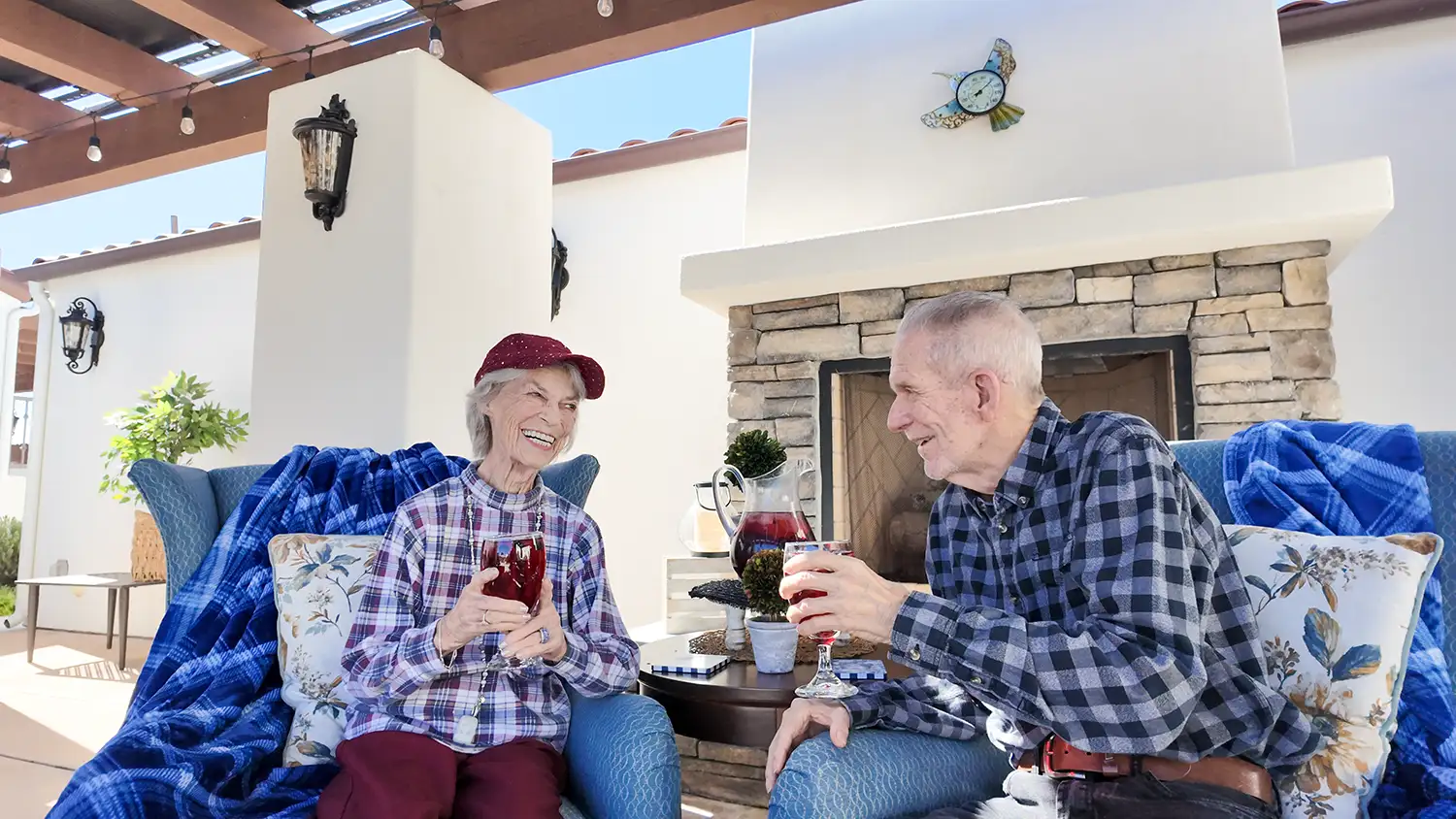
At Ojai Meadows, the central courtyard, where a fenced pool once stood, was recently redesigned into an open, shaded gathering space with newly planted trees, part of a broader set of improvements part of the community’s move into the Carefield Living family. That kind of visible, current investment is worth asking about directly on any tour: what has this community built, renovated, or improved in the past year, and what comes next?
A community that can answer with specifics is telling you something a brochure cannot. A community that cannot is also telling you something.
What to Ask About Cost
Senior living costs vary enormously by region, care level, and individual needs, and no family should rely on a national average to plan a real budget. According to the CareScout 2025 Cost of Care Survey, California’s median cost for assisted living is approximately $7,000 per month, about 13% above the national median of roughly $6,200. Costs in any given community can vary depending on room type, care level, and additional services.
Rather than anchoring to an advertised starting price, ask for a full written breakdown of base rent, care tier charges, and any additional fees before comparing two communities. The advertised number and the actual monthly bill are not always the same figure.
Why Location Matters More Than It Seems
Location affects far more than convenience for visiting family. It shapes the texture of daily life for the resident. Ojai is a small city of fewer than 8,000 people, known for its arts community, oak-shaded streets, and the particular quality of evening light residents call the pink moment, when the surrounding Topatopa Mountains glow rose at sunset.
For residents who have spent years in Ojai or the surrounding Ventura County area, staying local means staying close to a landscape and a pace of life they already know, rather than starting over in an unfamiliar place during a major life transition. Ojai’s proximity to Ventura and the coast, about a 30-minute drive to the beach, also means family visits do not require sacrificing the area’s broader appeal.
Families evaluating any community should ask not just “is this a good facility” but “is this a place my family member would recognize as home.”
Frequently Asked Questions
1. Is Ojai a good place to retire?
Yes, for many older adults, particularly those who value a small-town pace, natural beauty, and a strong arts and wellness community. Ojai offers a mild climate, a walkable downtown, and proximity to both the coast and the larger amenities of Ventura County, while remaining a genuinely small city with fewer than 8,000 residents. Its slower pace and strong sense of local identity appeal especially to retirees who have lived in or visited the area for years.
2. Where is the best place for seniors to live in California?
There is no single best location, since the right fit depends on climate preference, proximity to family, cost, and lifestyle. Coastal and inland Central Coast communities like Ojai are popular for their mild weather and slower pace, while Southern California metro areas offer more extensive medical infrastructure but at a higher cost. Families should weigh climate, distance from family, and community character alongside cost when comparing regions.
3. What is the average cost of senior living in California?
According to the CareScout 2025 Cost of Care Survey, California’s median assisted living cost is approximately $7,000 per month, about 13% above the national median of roughly $6,200. Costs vary significantly by region, with coastal and metro areas generally higher than inland communities. Because these are statewide medians, families should request a full written cost breakdown for any specific community rather than budgeting based on a general average.
4. What is the number one mistake retirees make when choosing senior living?
The most common mistake is prioritizing amenities and first impressions over a clear-eyed assessment of actual needs and long-term fit. A beautiful lobby or an impressive activity board does not answer whether a community can genuinely support a resident’s care needs as they change over time. Families who start by assessing physical, social, and financial needs, then evaluate specific communities against that list, tend to make decisions they are less likely to regret.
The team at Ojai Meadows Senior Living is glad to answer specific questions and show families what daily life here actually looks like. Schedule a visit to see for yourself.