Transitioning from home ownership to senior living in Ojai involves four steps: preparing emotionally, managing the home sale, downsizing thoughtfully, and choosing a community that fits the life you want. Ojai Meadows Senior Living offers both assisted living and memory care in a small house model, a more home-like design that makes a move from home that much easier
The house has been home for a long time. It holds the garden you planted, the kitchen table where everyone gathered, the bedroom where mornings started the same way for twenty years. Leaving it is not a small thing. Neither is staying when staying is no longer safe.
Most families who begin looking at senior living are not looking because they want to. They are looking because something has changed: a fall, a diagnosis, a caregiver who has run out of capacity, a parent who is no longer managing on their own. The search feels urgent and disorienting. This guide is meant to make it a little less of both.
What Does Transitioning from Home Ownership to Senior Living Actually Involve?
Transitioning from homeownership to senior living involves four distinct areas: preparing emotionally for the change, managing the practical and financial aspects of the home sale, downsizing possessions, and choosing a community that fits the life ahead. Each area takes time and benefits from being approached in order rather than all at once.
Emotional preparation often gets skipped because it feels less concrete than financial decisions. That is a mistake. Families who have done this well consistently say that the hardest part was not the logistics; it was the conversation that led to them. Starting there, before the paperwork and the real estate agent, gives everyone more room to move.
How Do You Prepare Emotionally for Leaving a Long-Term Home?
Leaving a home that has held decades of life requires naming what it meant before you can release it. That is not sentimentality; it is the practical work of helping someone move forward without dragging unresolved grief behind them.
One way to approach this is to separate the house from the memories. The memories do not leave when the house does. They travel with the person. Photographs, familiar objects, a favorite chair — these things, when carried into a new space, carry the life they came from. Many residents at Ojai Meadows bring pieces of their Ojai home into their apartment: art made locally, objects from the garden, photographs of the Topatopa Mountains at dusk.
For adult children helping a parent through this transition, the most useful thing you can do is listen before you plan. Your parent is not just losing a house. They may be losing the version of themselves who lived in it independently. That deserves acknowledgment before it becomes a logistics conversation.
When Should You Sell the Home — Before or After the Move?
The timing of a home sale relative to a senior living move depends on whether home sale proceeds are needed to finance the transition and how long a family can realistically sustain the cost of two places simultaneously.
If home equity is the primary funding source for senior living, most families need to sell before or immediately after the move. Bridge loans are a short-term financing that allows families to use home equity to cover senior living costs while the home is listed — are one option that creates flexibility. These are available through banks and senior-specialized financial services providers. A senior real estate specialist (SRES) can advise on the timing and help families navigate both the emotional and financial dimensions of the sale.
If the family can carry both costs for a period, waiting until the move is complete before listing can reduce stress considerably. Living in a home while simultaneously packing and keeping it show-ready is a genuine burden, particularly for older adults managing health challenges at the same time.
How Do You Downsize from a Long-Term Family Home?
Downsizing from a family home of twenty or thirty years is one of the most emotionally and physically demanding parts of transitioning to senior living. Starting early, ideally two to three months before an anticipated move date, makes it manageable.
A practical framework is to sort everything into four categories: keep, give to family now, donate, and let go. The “give to family now” category matters more than people expect. Passing heirlooms and meaningful objects to adult children or grandchildren while you are present to see their response is one of the more meaningful parts of this transition for many people.
For the Ojai Meadows small house model specifically, the scale of the move is worth understanding before you begin. Each residential building has 16 individual apartments. The living spaces are well-designed. Requesting a floor plan from the Ojai Meadows team before you begin sorting will help you determine exactly what fits and what needs a new home.
What Makes Transitioning to Senior Living in Ojai Specifically Different?
Ojai is not a neutral backdrop for this transition. It is a city with a distinct character: unhurried, artistically rich, and oriented toward natural beauty and local food. Families moving a parent to Ojai Meadows are not just choosing a community; they are choosing a place.
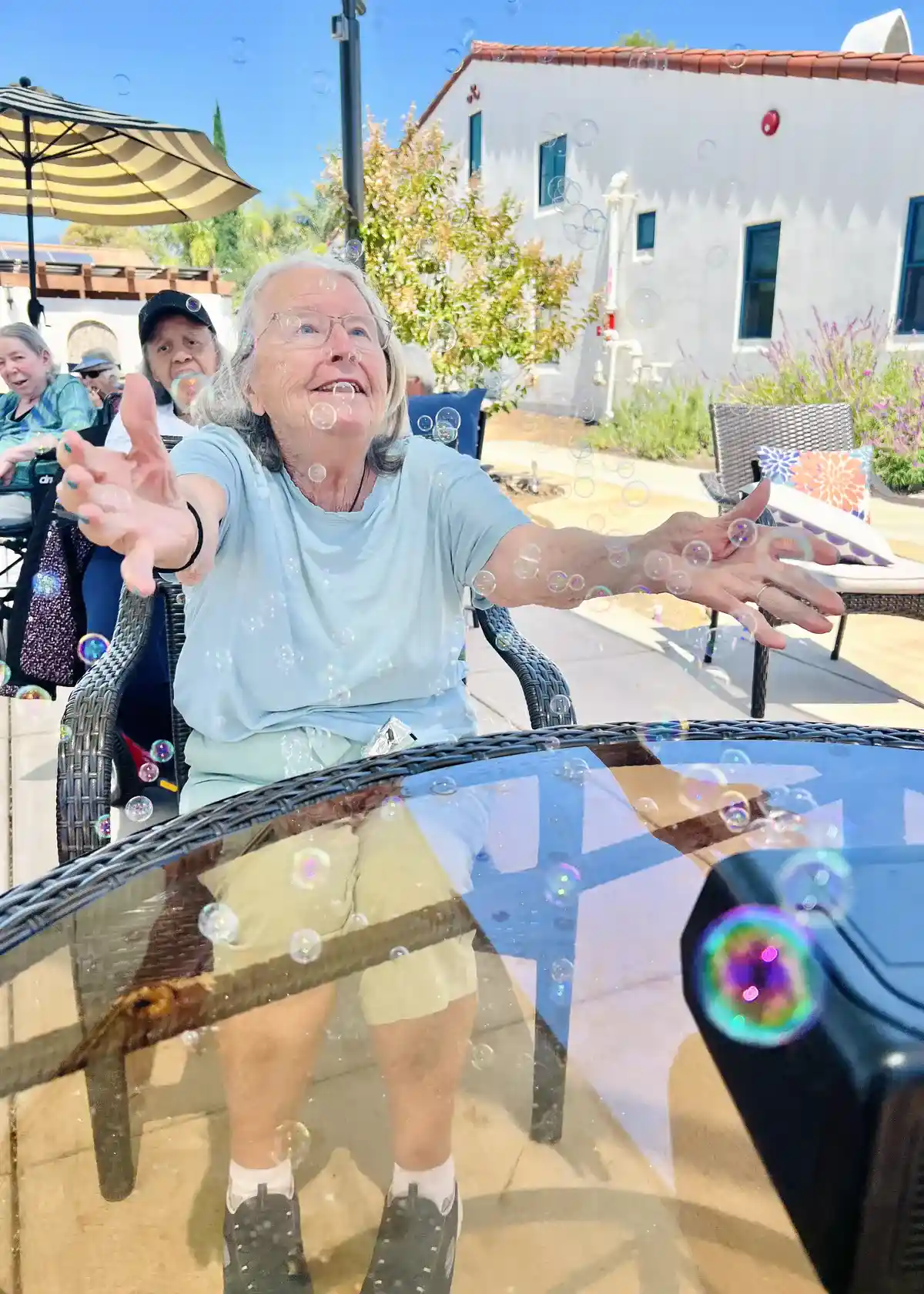
That matters in practice. Residents at Ojai Meadows go downtown to browse the shops and galleries. They visit the Ojai Olive Oil Company for tastings. They enjoy the trails in the neighboring Ojai Meadows Preserve. They walk the oak-shaded paths and sit on the central courtyard in the evening when the Topatopa Mountains turn rose-colored at dusk, what locals call the pink moment. The community’s dining program sources organic, locally grown ingredients in keeping with Ojai’s approach to food.
For seniors who have lived in Ojai or the greater Ventura County area, the move to Ojai Meadows is less a departure from the life they have known and more a continuation of it. The surroundings are familiar. The pace is the same. What changes are the daily support, the building scale, and the company at the table.
What Is the Small House Model and Why Does It Matter for This Transition?
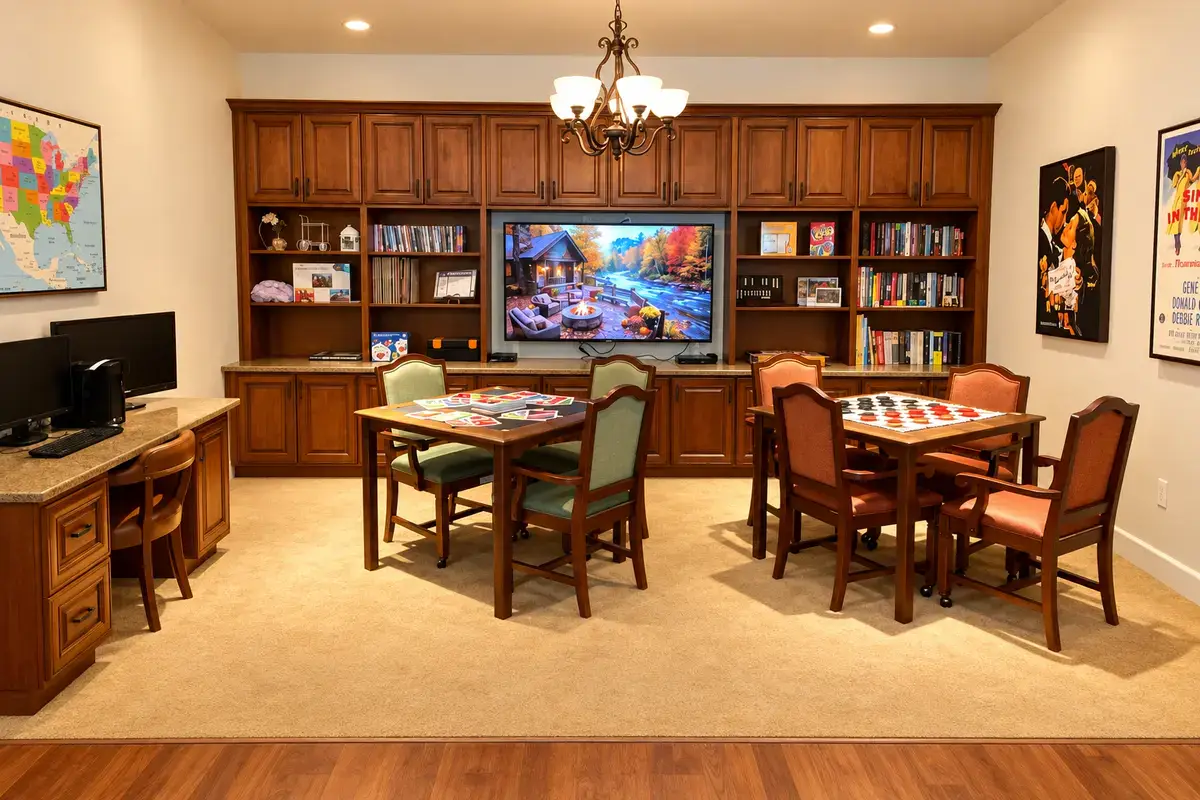
The small house model replaces the large institutional buildings common in traditional senior living with smaller, residential-scale homes in which a defined group of residents shares common spaces. At Ojai Meadows, each of four residential buildings houses 16 apartments and has its own living room, dining room, and kitchen.
For someone transitioning from a private home, this model makes the change feel smaller than it is. You are not moving into a wing of a large building or navigating long corridors to reach a shared dining room. You are moving into a building with a set of group neighbors, a kitchen down the hall, and a living room where people actually sit. The architecture mirrors a life, not an institution.
Two buildings at Ojai Meadows are dedicated to assisted living, and two to memory care. Families who are uncertain which level of care a parent needs can tour both options during a single visit and ask the team to help them understand the difference in practice.
What Should You Look for When Touring a Senior Living Community in Ojai?
Tour with your senses, not just your checklist. Whether the hallways smell clean. Whether residents are in the common spaces or absent from them. Whether the staff you encounter in passing know residents by name. Whether the building feels like a place someone lives or a place someone is managed.
Specific questions to ask at Ojai Meadows and any other community you visit: How does the team handle a resident who is having a bad day? What does the daily schedule look like, and how flexible is it? What happens if a resident’s care needs increase? How does the community communicate with families, and how often?
The assisted living and memory care programs at Ojai Meadows are built around what the team calls five pillars: move, engage, feel, connect, and eat. Asking how those pillars show up in a typical Tuesday. Not a programmed event but an ordinary weekday will tell you more than any amenity.
For Families Navigating This When a Diagnosis Is Involved
When the transition from home ownership to senior living is prompted by a dementia diagnosis, the emotional and logistical weight of the move doubles. The person making the move may not fully understand what is happening. The family members managing it are often exhausted before it begins.
Memory care at Ojai Meadows was designed with this reality in mind. The Renewal pillar of the care philosophy exists specifically because the team understands that caregivers arrive worn down. The goal is to return tranquility to the family’s life, not just to house their loved one. The community is secure, familiar in scale, and built around the individual interests of each resident rather than a generic program calendar.
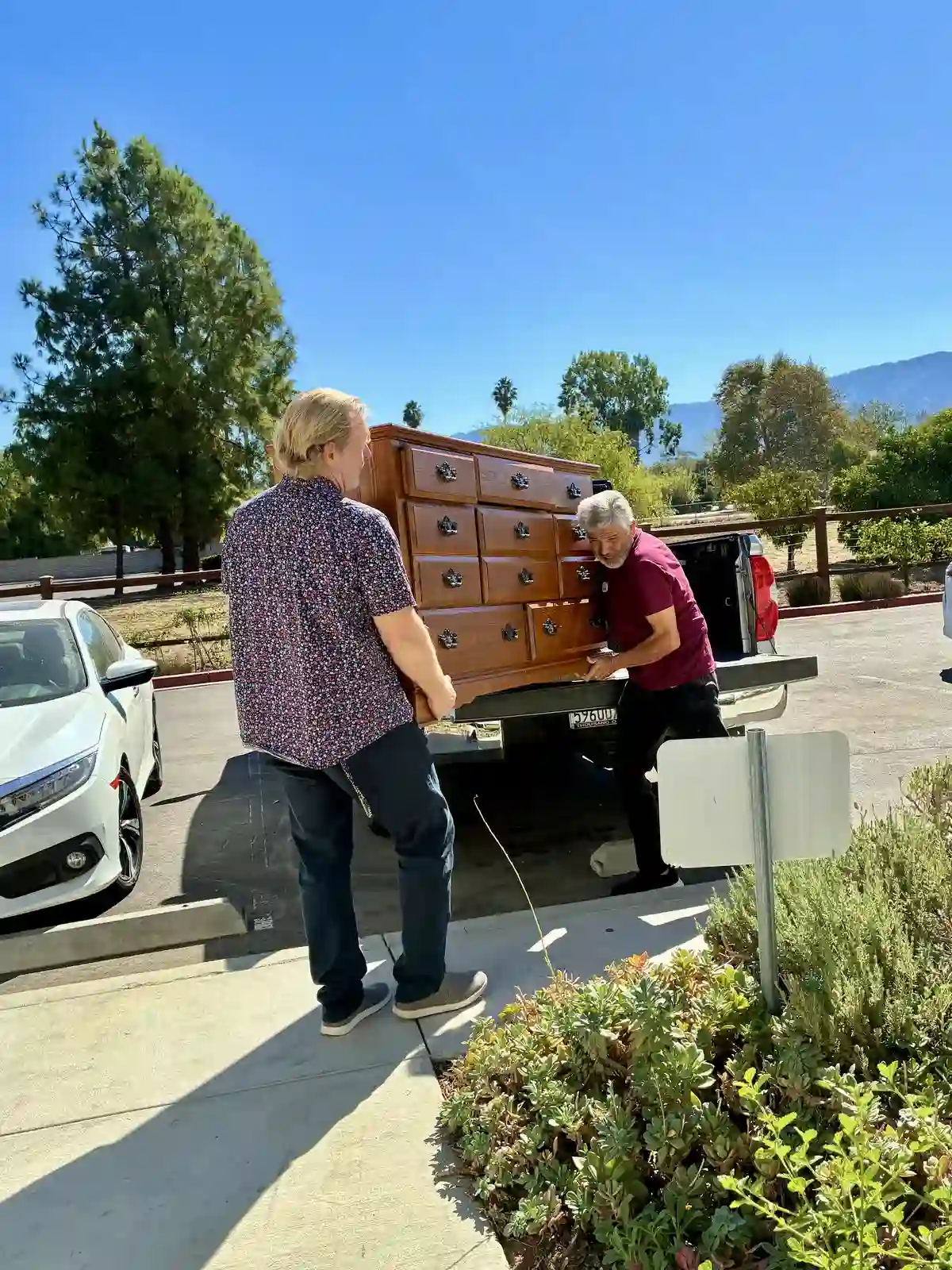
Recently, the community’s Executive Director and Maintenance Director helped the wife of a new memory care resident. She has no support in the area, so they volunteered. They came to her house, loaded the furniture, and got it set up in his room.
Families in this situation benefit from visiting sooner rather than later. Touring a community while a loved one can still participate in the conversation and express a preference for a room, a view, a dining style, changes the experience of the move for both the resident and the family.
The Move Is Not the End of the Story
The house you are leaving carried a life. The community you are moving toward will carry the next one. Ojai Meadows Senior Living exists to make that next chapter as full as the ones before it, with support nearby, a community built to feel like home, and the natural beauty of Ojai just outside the door.
If you are beginning to think about this transition, the best first step is to visit before the decision becomes urgent. The Ojai Meadows team is ready to walk you through both assisted living and memory care and help you understand what daily life here actually looks like.
Frequently Asked Questions
How long does it take to transition from home ownership to senior living?
The timeline varies significantly depending on whether a home sale is needed first, how much downsizing is required, and how quickly a care need has emerged. Families who plan ahead typically spend two to four months preparing before a move. Families responding to an urgent health event sometimes compress that timeline significantly. Starting with a community tour, while the decision is still optional, rather than urgent, gives everyone more time to make it well.
Should I sell my home before or after moving to senior living in Ojai?
There is no single right answer. If home equity is needed to finance senior living, the sale typically needs to happen before or concurrent with the move. Bridge loans can provide flexibility by allowing families to use home equity to cover senior living costs while the home is still listed for sale. If the family can cover both costs for a period, waiting until after the move can reduce the burden of keeping a home show-ready while preparing for the move.
What is the difference between assisted living and memory care at Ojai Meadows?
Assisted living at Ojai Meadows supports residents who benefit from help with daily activities while maintaining independence. Residents have their own apartments, access to a daily calendar of activities, group outings, restaurant-style dining, and 24/7 care staff. Memory care at Ojai Meadows provides specialized programming and a secure environment for residents living with Alzheimer’s disease, dementia, or other forms of memory loss, with care built around the pillars of community, activity, renewal, and enjoyment. Families unsure which is the right fit are encouraged to tour both.
How do I start the conversation with a parent about transitioning to senior living?
Start with curiosity rather than a plan. Ask about what they find hardest about their current situation, what they worry about, and what they wish were different. Families who lead with a solution — “I think it’s time to look at senior living” — often encounter resistance that is really about not being heard. Leading with questions and listening to the answers creates the space for the conversation to move naturally toward options.
Is Ojai Meadows a good fit for someone who has always lived in Ojai?
For longtime Ojai residents, Ojai Meadows offers a meaningful continuity of place. The surroundings, the pace, the locally sourced food, and the community’s connection to downtown Ojai and the wider Ventura County area reflect the Ojai way of life. Residents continue to go downtown, visit familiar places, and experience Ojai rather than being removed from it. For someone whose identity is tied to this place, that continuity is not a small thing.
Is Ojai Meadows a good fit for someone relocating to Ojai?
Yes. For someone moving to Ojai from another city or state, Ojai Meadows offers a ready-made community in a place where they may not yet know anyone. The small-house model gives a new resident a set group of neighbors and a team that gets to know them, and families can tour assisted living and memory care in a single visit. Families from outside the area can contact the Ojai Meadows team to plan their visit and ask questions about daily life.