Art therapy can be surprisingly meaningful for seniors, especially for people living with dementia. When verbal skills start to fade, creative expression can help people stay connected to what still feels familiar: color, movement, memories, and emotion.
At Carefield Pleasanton, we regularly use art in our memory care programming—not because it’s trendy, but because it works. We’ve seen residents who barely speak sit down with a paintbrush and start to relax, focus, or even smile.
These moments don’t need much explanation. They speak for themselves.
Why Art Makes Sense in Memory Care
People with dementia often respond better to activities that don’t rely on language. Art doesn’t require complete sentences or perfect recall. It gives people something to do with their hands and something to express without pressure.
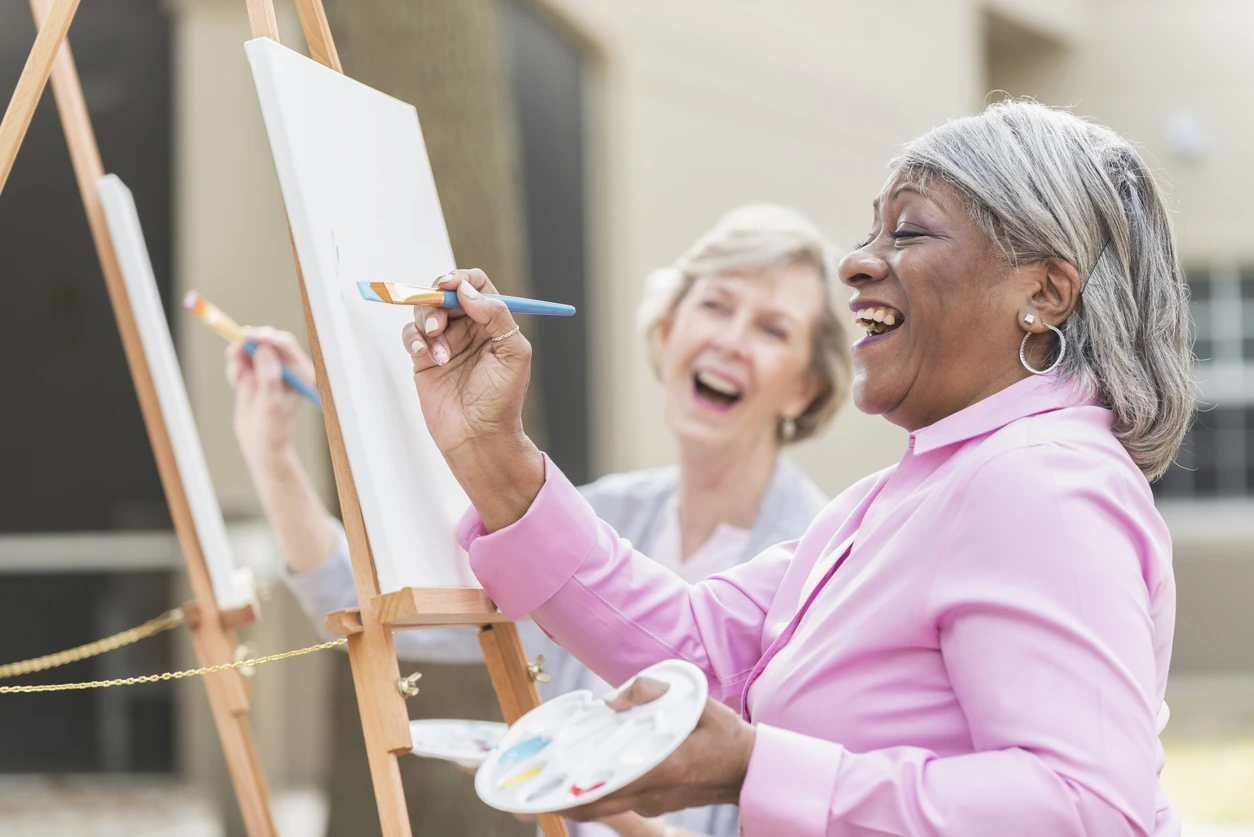
We offer quiet, gentle, and flexible art sessions. Some residents choose to paint with watercolors, work with clay, or create simple collages. Sometimes, it’s just about the colors on the page—not the final result.
Creative outlets like these can:
- Help reduce stress or agitation
- Improve mood and attention
- Encourage movement in the hands and fingers
- Offer a sense of accomplishment
- Brings up memories that felt long gone
We’ve also noticed that residents who struggle in group conversations often feel more comfortable and confident in art sessions. It’s a softer way to be part of the community.
What Art Looks Like at Carefield Pleasanton
Our art sessions are built around the people we support. Some days are more hands-on, and other days are quieter. We keep the environment simple and calm. There is no pressure, no competition, just the space to create.
Here are some of the creative activities our residents enjoy:
- Watercolor painting with prompts like flowers, seasons, or memory objects
- Clay and sculpting projects that focus on touch and texture
- Memory collages using images from magazines or family photos
- Group murals that encourage teamwork without needing to talk
- Coloring sessions with soft music and simple designs
These activities give residents a way to stay engaged and connected. Even if someone doesn’t remember what they made last week, that doesn’t matter. It’s the moment that counts.
Art Brings Familiar Feelings to the Surface
We’ve had residents paint things that reminded them of childhood or home without explaining why. One man painted blue waves every week. His daughter later shared that he grew up near the coast. Another resident created flower after flower. Her caregiver told us she used to keep a rose garden.
These stories are common, and they’re important. Art isn’t just “something to do.” It often brings back a feeling or memory that’s hard to reach in other ways.
And those emotional moments help people feel more grounded.
Family Can Be Part of It, Too
We always welcome families to join us during creative sessions. You don’t need to bring anything or be an artist. Just sitting beside your loved one and participating is enough.
Many families use art time to connect without relying on long conversations. Painting together, making a collage, or watching can make visits more comfortable.
And if you’re not able to visit often, we can share photos or updates. That way, you still get to see what your loved one has been creating and how they’re engaging.
It’s Not Just Art. It’s Connection.
Some people assume dementia care is only about safety and structure. That matters, but so does creativity, joy, and the chance to make something and say, “I did that.”
Art therapy gives residents that chance. It allows them to share how they feel, even if they can’t say it out loud. It helps them feel more like themselves, even having a tough day.
And that matters.
Want to See How We Use Art in Memory Care?
Carefield Pleasanton is a memory care community in Pleasanton, California. We support residents with dementia through routines, relationships, and meaningful experiences—including art.
If you’re looking for a place where your loved one will be supported emotionally, not just medically, we’d be glad to show you around. You can ask questions, tour our creative spaces, or join one of our art sessions to see how it works firsthand.
It’s not about perfection. It’s about presence. And we make space for that every day.