
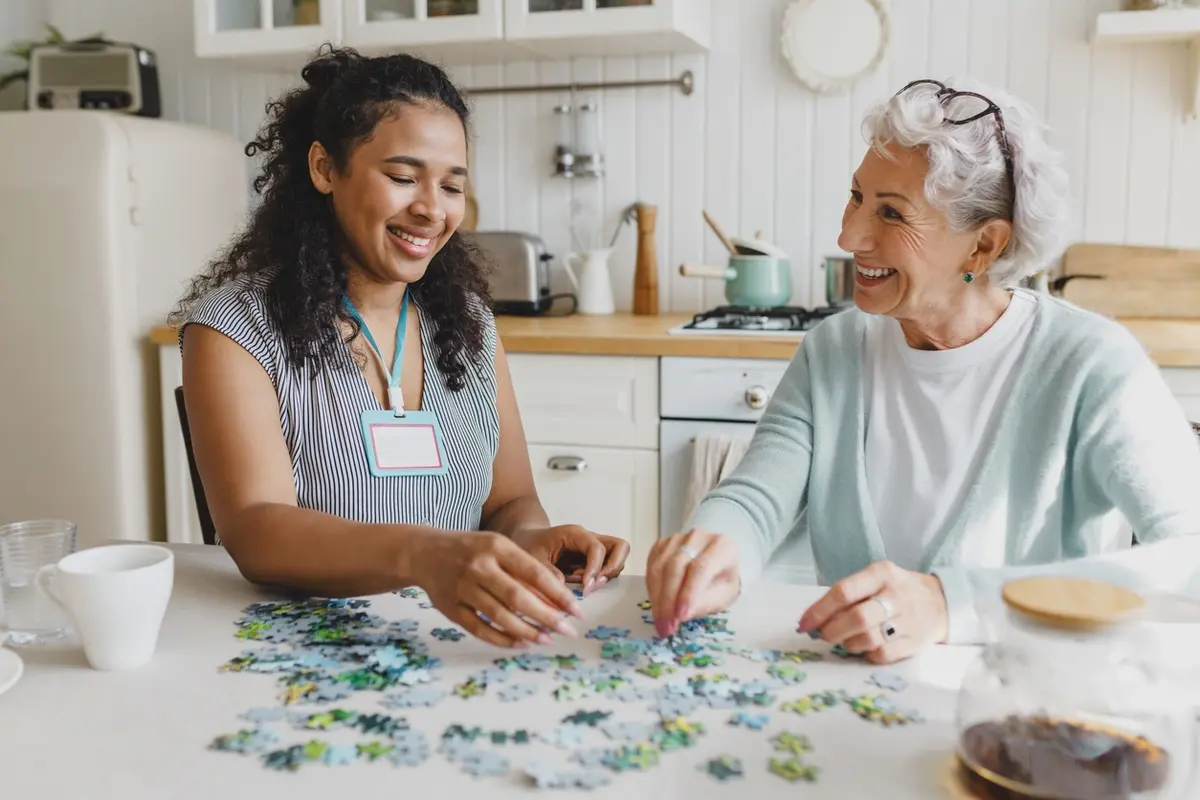
Reminiscence therapy is a non-medication approach that uses meaningful memories, music, photos, and familiar objects to reduce depression, ease agitation, and improve quality of life in older adults. At Carefield Ojai Meadows, it is woven into daily life for both assisted living and memory care residents.
Key Takeaways
- Reminiscence therapy improves mood, self-esteem, and quality of life in older adults.
- It activates long-term memories through sensory triggers like music, familiar scents, and photos.
- It fits naturally into daily care routines, not just scheduled activity sessions.
- Seniors with dementia benefit greatly because long-term memory often stays intact longer than short-term memory.
- Family members can use simple reminiscence techniques during every visit, no special training needed.
What Is Reminiscence Therapy?
Reminiscence therapy encourages older adults to recall and share their memories. It uses conversation, photos, music, familiar objects, and all five senses to spark those memories. The goal is not to test what someone remembers. The goal is to create connection, comfort, and a sense of purpose.
At Carefield Ojai Meadows, our care teams use reminiscence in both planned group activities and everyday moments. A team member might sit with a resident and look through old photographs before lunch. A caregiver might play a song from a resident’s hometown while helping them get ready in the morning. These small moments add up to real change in mood and engagement throughout the day.
Research backs this up. A meta-analysis of 12 randomized controlled trials found that reminiscence therapy produces a moderate effect on reducing depressive symptoms in seniors with dementia. Residents living in care communities showed even greater improvement than those in home settings, which reflects what our team sees here in Ojai every day.
The 6 Types of Reminiscence Therapy
Not every reminiscence session looks the same. Here are the six recognized types and how each one shows up in care settings like ours at Ojai Meadows:
| Type | Description | Best Used For |
|---|---|---|
| Simple (Pleasurable) | Sharing happy memories for enjoyment | General well-being, social connection |
| Evaluative | Reviewing life events to find meaning | Life review, acceptance |
| Obsessive/Haunt | Processing difficult memories | Grief, trauma with therapist support |
| Narrative | Telling life stories in sequence | Preserving personal history |
| Transmissive | Passing on values and experiences to family | Intergenerational bonding |
| Instrumental | Using past successes to cope with present challenges | Building confidence and resilience |
In daily life at Carefield Ojai Meadows, simple and transparent reminiscence is most common. These approaches are low-stress, easily fit into morning routines or afternoon activities, and often spark genuine moments of laughter and connection between residents and visitors.
Who Benefits from Reminiscence Therapy?
This approach supports a wide range of residents across both our assisted living and memory care programs.
- Residents with dementia or Alzheimer’s. Long-term memory often stays accessible even when short-term memory fades. Familiar songs, old photos, and meaningful objects give residents with dementia a confident way to engage and share.
- Residents experiencing low mood or isolation. Revisiting positive life moments helps rebuild self-worth. Sharing stories in a group gives residents something to look forward to each day.
- Seniors are newly settling into community life. Talking about familiar places and life experiences eases the anxiety that can come with moving somewhere new. It grounds residents in who they are, not just where they are.
- Reminiscence gives families and loved ones a real way to connect. It opens new conversations and creates lasting memories.
If your loved one is showing early signs of memory loss and you are trying to figure out what care looks like from here, our article on signs it might be time for memory care can help you think through the next step.
How Our Team at Ojai Meadows Uses the 5 Senses
Our care team does not wait for a scheduled session to use reminiscence. It happens at the breakfast table, during a walk through our Ojai courtyard, and in quiet one-on-one moments throughout the day. Here is how each sense plays a role.
- Our team uses old photo albums, postcards from places residents lived or loved, and images from different decades. Even a familiar face in a photograph can unlock a 20-minute story that lights up a resident’s entire morning.
- Music is one of our most-used tools. Songs from a resident’s teenage years through early adulthood tend to produce the strongest recall. Our memory care team works with families to build personal playlists for each resident.
- A familiar recipe can bring back decades of memory in a single bite. Our dining team incorporates comfort foods and regional favorites. Residents often share stories at the table that they have not told in years.
- Holding something familiar, a worn gardening glove, a wooden tool, a soft blanket from home, activates memory through the hands. Families are encouraged to bring meaningful items when their loved one moves in.
- Fresh citrus from the orchards near Ojai, the smell of something baking in the kitchen, a familiar soap. Our team uses scent intentionally during activities and mealtimes because it works fast and works well.
Read more about how sensory-based activities support residents day to day in our article on sensory stimulation for seniors with dementia.
5 Ways Families Can Use Reminiscence During Visits
You do not need training or special materials. These five approaches work whether you visit us in Ojai or see your loved one elsewhere.
- Bring a memory box with 8–10 familiar items: a photo, a recipe card, a keepsake, or a meaningful postcard. Let your loved one handle each and share memories.
- Build a playlist together before you visit. Think about the music your parent or grandparent loved when they were young. Put together 15 to 20 songs and play them during your visit. You will likely see a response within the first few minutes.
- Ask one story-based question per visit, such as “What did your neighborhood look like growing up?” or “What was your first home like?” One question is enough. Give plenty of time without rushing.
- Record what they share. Use your phone to capture stories during visits. These recordings carry real value for siblings, grandchildren, and other family members who cannot always be there in person.
- Tell our team what resonates with your loved one. We use your input to customize engagement for each resident.
For more on how our community supports meaningful daily engagement, explore activities in assisted living at Carefield communities.
Things to Know Before Your Next Visit
- Accuracy is not the goal. If your loved one remembers something differently, follow their story. Connection matters most.
- Do not correct or redirect. Correcting a misremembered detail can cause distress and shuts the conversation down. Let the memory go where it wants to go.
- Difficult emotions may come up. If a memory brings up grief or loss, sit with it. You do not need to fix it. Being present is enough. Our care team at Carefield is always nearby if you need support.
- Group sessions build community. At Carefield Ojai Meadows, our group reminiscence activities often surface shared experiences between residents who did not realize they had so much in common. These connections reduce isolation and build real friendships.
- Frequent, brief conversations do more than occasional long ones. Ten minutes each visit matter more than rare, extended sessions.
How We Care at Carefield Ojai Meadows
Reminiscence therapy is not a routine task. It’s how our team connects with every resident—through stories, favorite music, foods, and cherished objects—during meals, activities, and quiet moments.
If you are considering what the right fit looks like for your loved one, we would love to show you what daily life here feels like. Read more about our memory care approach or reach out to schedule a tour. We are right here in Ojai.
Frequently Asked Questions
What is the goal of reminiscence therapy?
To improve emotional well-being by helping seniors reconnect with meaningful memories. It builds self-esteem, reduces feelings of depression and isolation, and gives older adults a sense of identity and purpose. At Carefield Ojai Meadows, it shapes how our team shows up for residents every single day.
What are the 6 types of reminiscence?
Simple, evaluative, obsessive/haunt, narrative, transmissive, and instrumental. Each type serves a different purpose. Simple, transmissive reminiscence is most commonly used in senior living settings because it is naturally low-stress and builds connections without pressure.
Who benefits from reminiscence therapy?
Seniors with dementia, low mood, or anxiety benefit most. It also supports residents as they adjust to a new community and gives family members a meaningful way to connect during visits.
What is the main purpose of reminiscing?
To help older adults feel valued, find meaning in their story, and stay connected to who they are. For residents in memory care, reminiscing also helps preserve a sense of identity even as other abilities change over time.
What is an example of reminiscence therapy?
A care team member plays a resident’s favorite songs from the 1950s, and the resident begins sharing stories about Saturday dances in their hometown. The caregiver listens, asks one follow-up question, and what starts as background music becomes a 30-minute conversation full of laughter. This kind of moment happens regularly at Carefield Ojai Meadows.