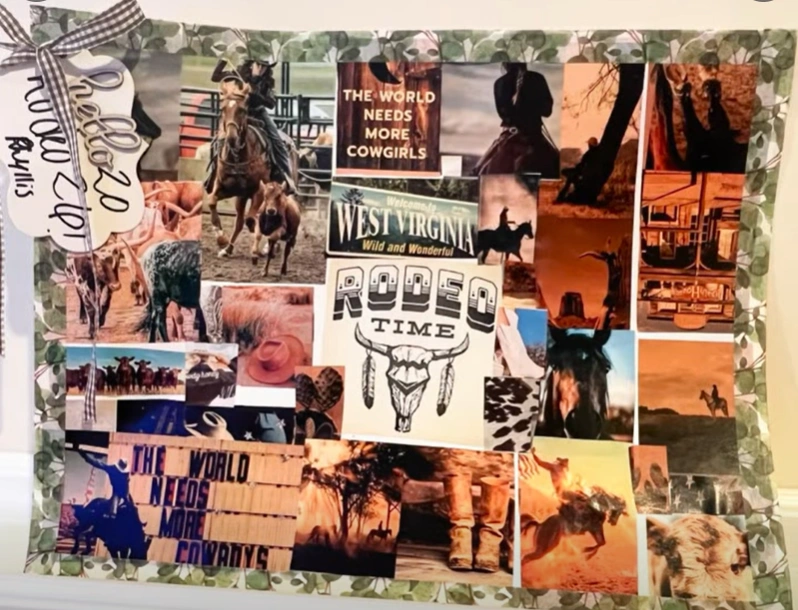
Collage art activity combines hands-on creativity with an unusually effective way to spark memory and conversation. Choosing and arranging images engages fine motor skills, decision-making, and focus, while the images themselves often bring to the surface memories that a direct question never would. At Madonna Gardens in Salinas, a western-themed collage tied to Rodeo Week recently did exactly that.
A resident cutting out a paper horseshoe does not look like a breakthrough. But watch long enough, and sometimes it becomes one.
That is what happened last month at Madonna Gardens, when a rodeo-themed collage activity turned into a conversation nobody had planned for.
Key Takeaways
- Collage art activity engages fine motor skills, focus, and decision-making while lowering the pressure that a blank page or a direct question can create.
- Choosing and arranging images tends to surface memories more naturally than conversation alone, since a specific picture can trigger a specific recollection.
- At Madonna Gardens in Salinas, a western-themed collage activity tied to Rodeo Week led one resident to share a memory of growing up in Arizona and attending rodeos, sparking a wider conversation among the group.
- Salinas’s own rodeo tradition, California Rodeo Salinas, has been running since 1911 and remains one of the largest rodeos in the country, giving local seniors a genuine, personal connection to rodeo-themed programming that goes beyond a craft-table theme.
Why Collaging Works as a Senior Living Art Activity
Collaging supports residents, including those living with dementia, because it asks for a decision, not a performance. Unlike a blank canvas, which can feel intimidating, a collage starts with images already there. The resident’s task is simpler: choose what speaks to them, and place it where it feels right.
That structure keeps several things engaged at once. Selecting and cutting images calls on fine motor skills and hand-eye coordination. Deciding what to include and where to place it calls on judgment and sustained attention. And because the images are specific rather than abstract, a photograph of a horse or a barn can trigger a memory that a general conversation prompt never would.
The result is an activity that feels like a craft on the surface and works like reminiscence therapy underneath.
How One Collage Activity Became a Real Conversation
At Madonna Gardens, a western-themed collage activity led directly to a resident sharing a personal memory that shaped the rest of the session. The activity was built on the success of an earlier series, “Back to the Eras” collages, which the community’s Resident Care Director had seen resonate strongly with residents.
This time, the theme was rodeo. As the group worked, one resident shared a memory of growing up in Arizona and attending rodeos as a child. That single memory opened into a wider conversation among the group, covering horses, riding, and life in the Wild West as residents remembered it.
Nobody scheduled that conversation. It came out of a resident choosing an image that meant something to her, in a room where sharing that meaning felt safe. That is the real value of collage in memory care and assisted living: it is a craft project on the surface, and a conversation starter underneath.
Why Rodeo Week Means Something Different in Salinas
Rodeo theming is not a generic craft-table choice at Madonna Gardens. It connects directly to one of Salinas’s oldest and most significant local traditions. California Rodeo Salinas has run since 1911, making it one of the longest-running rodeos in the country and one of the largest in California, drawing top competitors on the professional circuit every summer during what the city calls Big Week.
For residents who grew up in or around Salinas, or in ranching and rodeo country like the resident who remembered Arizona, that history is not abstract. Many residents attended the rodeo themselves, watched the parade down Main Street, or knew someone who competed. A rodeo-themed collage activity taps into an aspect of identity specific to this community and this region, rather than a theme borrowed from elsewhere.
That local specificity is part of why the activity worked as well as it did. A generic Western theme might have produced a nice craft. A rodeo theme, in a city built around its own rodeo since 1911, produced a memory.
From Horseshoes to Eras: A Program That Builds on What Works
Good memory care and assisted living programming pays attention to what actually resonates, then builds on it. The rodeo-themed collage did not happen in isolation. It followed the “Back to the Eras” collage series, which had already shown the Resident Care Director how effectively collage work could engage residents and spark reminiscence.
That earlier success led directly to a new, more specific application: decorative horseshoes tied to Rodeo Week, followed by the western-themed collage that sparked the Arizona rodeo memory. Each activity informed the next, rather than the calendar simply rotating to a new craft because the month changed.
Bringing It Back to Salinas
Collage activity works best when it is not just a craft, but a way in. At Madonna Gardens, that means building programming around what already means something to residents, whether that is an era they remember or a rodeo tradition that has shaped this city for over a century.
Frequently Asked Questions
1. How does collage help residents with memory loss communicate?
Collaging gives residents something concrete to react to, which is often easier than responding to an abstract question. A specific image, a horse, a barn, a familiar landscape, can surface a memory or a story that a resident might not have found words for otherwise. The activity becomes a starting point for conversation rather than the conversation itself.
2. What themes work well for collage activities in senior living?
Themes connected to a resident’s personal history or regional identity tend to work best, since they are more likely to trigger genuine memories rather than generic recognition. At Madonna Gardens in Salinas, rodeo and western themes connect directly to California Rodeo Salinas, a local tradition since 1911. Communities in other regions might find similar success with themes tied to their own area’s history, industries, or traditions.
3. Is collage activity appropriate for residents at different stages of dementia?
Yes, with some adaptation. Residents in earlier stages, including many in assisted living, may plan and execute a more detailed collage independently, while residents further along may need more guided choices, such as selecting between two or three images rather than a full array. The core benefits: fine motor engagement, decision-making, and the chance for an image to spark a memory, remain available across a wide range of cognitive levels.