
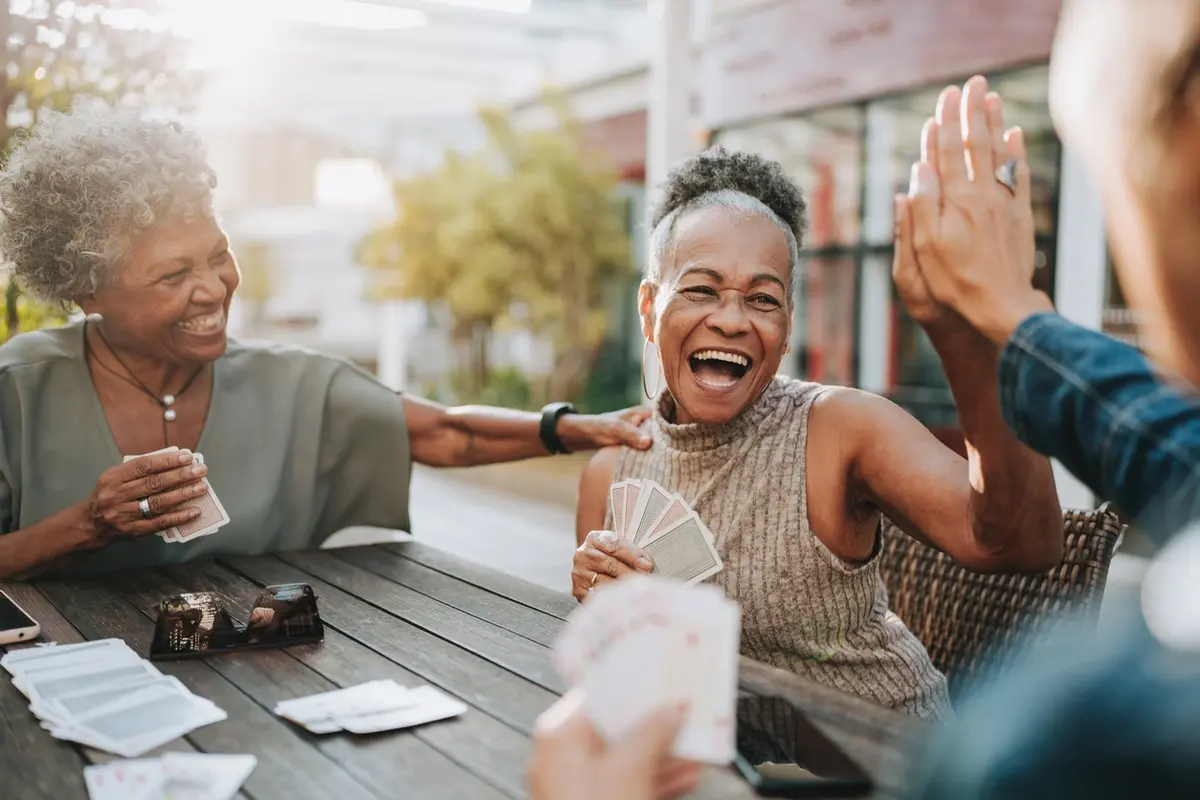
The benefits of social activities in assisted living include reduced depression, stronger cognitive function, and longer life expectancy. According to the National Academies of Sciences, social isolation is associated with an approximately 50% increased risk of developing dementia in older adults.
At Carefield Castro Valley, social connection is not a feature. It is part of the care plan. This article breaks down exactly what those benefits look like, which activities deliver the most impact, and how you can make the most of community life in Castro Valley.
Key Takeaways
- Social isolation is linked to an approximately 50% increased risk of developing dementia, per the National Academies of Sciences.
- Assisted living communities provide daily structured and free-choice activities.
- Social connection reduces depression, anxiety, and feelings of isolation.
- Regular group activities improve physical health and immune function.
- At Carefield Castro Valley, residents enjoy a full calendar of social programs in Castro Valley, CA.
What the Research Actually Says
A meta-analysis by Holt-Lunstad et al. (PubMed, 2015) found that loneliness is associated with a 26% higher risk of early mortality, with social isolation raising that risk to 29%. These numbers held across studies even after controlling for age, gender, and health status.
Isolation is not just uncomfortable. It causes measurable biological stress. Chronic loneliness raises cortisol levels, weakens the immune response, and accelerates the progression of conditions like dementia and cardiovascular disease.
The good news: the benefits of social activities in assisted living are just as measurable. Group activities, shared meals, and structured programs create the social contact your body and mind need, consistently and conveniently.
5 Key Benefits of Social Activities for Seniors in Assisted Living
1. Stronger Mental Health
Group activities give you something to look forward to each day. That daily anticipation matters. Seniors who participate in regular group programs report lower rates of anxiety and depression. One study from Harvard found that strong social relationships are as protective against early death as quitting smoking.
At Carefield Castro Valley, programs like game nights, art classes, and group discussions are designed to keep your mind active and your mood lifted.
2. Better Cognitive Function
Social interaction is a workout for your brain. Conversations, games, and learning new skills all activate neural pathways. This is why communities that prioritize activities in assisted living show measurable improvements in resident memory and focus.
Even casual conversation at the dinner table stimulates memory recall, verbal processing, and attention. Over time, this adds up.
3. Improved Physical Health
Social activities encourage movement. A fitness class is more enjoyable with peers. A walk around the garden is more likely to happen when a friend is waiting. Seniors in active communities move more, eat better, and sleep more consistently.
Research shows that socially engaged seniors have lower rates of high blood pressure, arthritis flare-ups, and hospital readmissions. Explore how our amenities support this active lifestyles.
4. Reduced Risk of Isolation and Loneliness
One in four adults over 65 lives alone. Loneliness in seniors is a public health crisis. Assisted living communities solve this directly. You have neighbors, staff who know your name, and a calendar built around connection.
Carefield Castro Valley offers a full activities and events calendar in the Castro Valley area so you are never left to fill your days alone.
5. Greater Sense of Purpose
Purpose is not something that happens to you. You build it through relationships, contributions, and routines. Volunteering to help set up a community event, joining a book club, or teaching others a skill all reinforce that your presence matters.
This sense of meaning directly reduces the risk of depression and keeps seniors mentally resilient, even when facing health challenges.
Social Benefits at a Glance: Carefield Castro Valley
| Social Benefit | What It Does for You | Activity Example at Carefield Castro Valley |
| Mental sharpness | Slows cognitive decline by keeping your brain engaged | Trivia nights, book clubs, puzzles |
| Emotional well-being | Reduces depression and loneliness through daily connection | Group dining, birthday celebrations |
| Physical health | Encourages movement and lowers risk of chronic illness | Yoga, walking groups, dance classes |
| Sense of purpose | Gives you reasons to get up and engage with the day | Volunteer projects, cooking clubs |
| Longer life | Regular social interaction linked to longer lifespan | Community outings, cultural events |
Why Assisted Living Is the Right Setting for Social Activity
Home-based seniors often lack reliable access to peers and structured programming. A drive to a community center requires transportation. A phone call is not the same as shared laughter over lunch.
Assisted living communities remove every barrier. Activities happen down the hall. Friendly faces are part of your daily environment. Staff are trained to encourage participation without pressure.
This is especially true in memory care, social programming is vital. Familiar routines, music therapy, and group sensory activities are proven tools for managing cognitive decline and maintaining dignity.
At Carefield Castro Valley, both assisted living and memory care residents benefit from tailored social programs that meet them where they are, not where the schedule demands.
Things to Know Before You Get Started
- You do not have to be outgoing to benefit. Even quiet participation in group activities has measurable health effects.
- Consistency matters more than intensity. Showing up daily to a 30-minute activity beats one large social event per week.
- Activities work best when they match your interests. Choose programs that reflect your personality and history.
- Family visits complement but do not replace peer socialization. Friendships with peers provide a unique form of connection.
- Memory care residents benefit from social activities too. Structured programming is especially important for cognitive health.
Which Types of Social Activities Deliver the Best Results?
Not all activities carry equal weight. Here is what the evidence supports:
Group discussions and classes rank highest for cognitive benefit. The combination of listening, speaking, and responding activates multiple brain regions simultaneously.
Physical-social activities such as group fitness, yoga, or walking clubs deliver dual benefits for the body and social connection. These are the most effective activities for physical health outcomes.
Creative programs like art therapy, music, or cooking classes build self-esteem, provide a sense of accomplishment, and open natural conversation. Learn more about art therapy for seniors and why it works.
Technology-assisted socialization such as video calls with family or online group activities supports connection when in-person options are limited but should supplement, not replace, face-to-face interaction.
Start Living More Fully at Carefield Castro Valley
The benefits of social activities in assisted living are real, measurable, and available to you right now. Carefield Castro Valley is your neighbor in Castro Valley, built around the belief that seniors deserve a life full of connection, purpose, and joy.
Whether you are exploring assisted living for yourself or supporting a loved one, our team is ready to walk you through what life at Carefield Castro Valley looks like day to day.
Visit our Castro Valley assisted living page or schedule a community tour to see the programs, spaces, and people that make this community exceptional.
Related Article: What Services Does Assisted Living Provide? Everything Seniors in Visalia Need to Know
Frequently Asked Questions
What are the advantages of social activities?
Social activities improve mental health, physical health, and life satisfaction.
They reduce depression and anxiety, keep the brain active, encourage movement, and give seniors a sense of belonging and routine that is directly tied to longer, healthier lives.
Why are social activities important for the elderly?
Elderly adults face a higher risk of isolation, which accelerates physical and cognitive decline.
Regular social interaction counters this by providing mental stimulation, emotional support, and physical encouragement that most seniors cannot access consistently when living alone.
What are the benefits of social activity in a nursing home?
Structured social programs in care settings reduce depression, slow cognitive decline, and increase resident satisfaction.
Residents in communities with active programming report higher quality of life scores and lower rates of behavioral symptoms tied to conditions like dementia.
What are 5 benefits to positive social connections?
Stronger immune system, lower risk of depression, improved memory, longer lifespan, and greater daily purpose.
Each of these outcomes is supported by clinical research and consistently observed in seniors who maintain regular social contact compared to those who are socially isolated.
What are 10 benefits of activity?
Activity benefits include improved mood, better sleep, stronger muscles, sharper memory, lower blood pressure, and more.
A full list: reduced depression, better cognitive function, stronger immune response, improved cardiovascular health, healthier weight, better sleep quality, greater mobility, stronger sense of purpose, lower cortisol levels, and longer lifespan.