
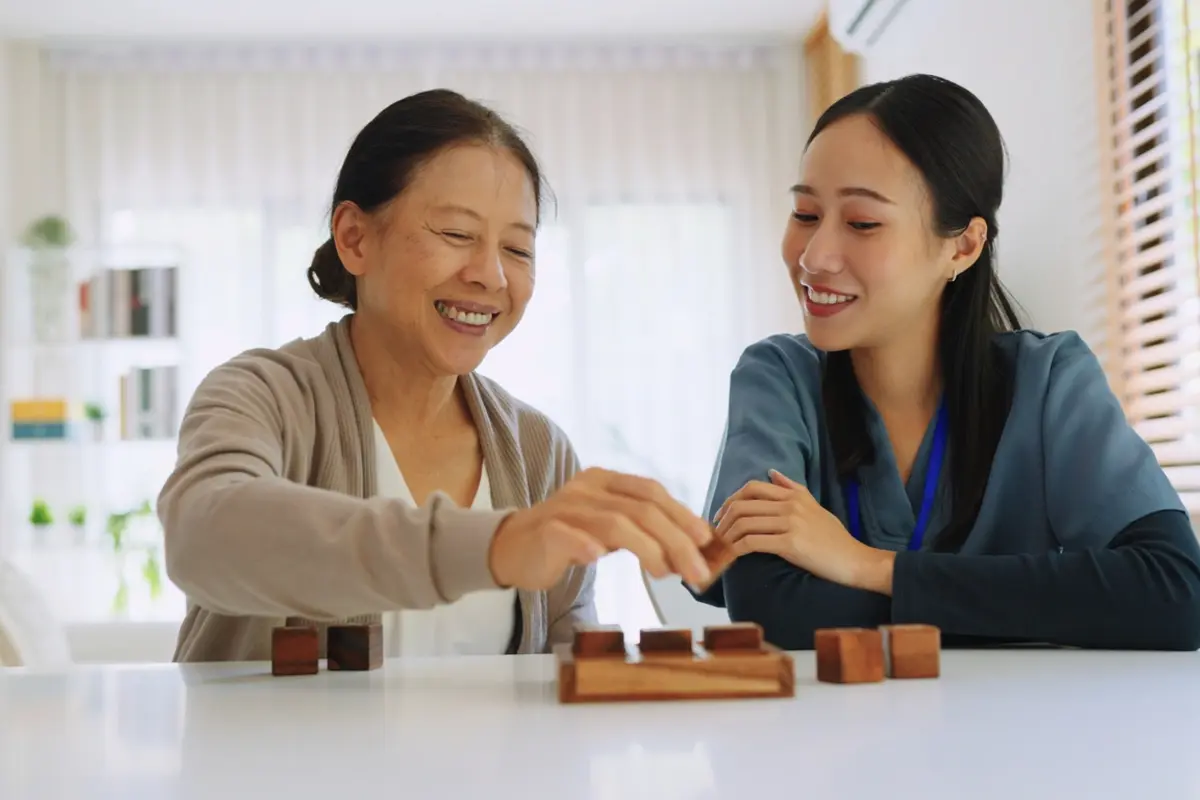
There is a moment a lot of families describe in similar ways. They visit mom and notice she has stopped cooking. Or dad is wearing the same shirt three days in a row. They assume it is dementia taking over. Sometimes it is. But sometimes the right kind of support, specifically occupational therapy for dementia, can help a person keep doing familiar tasks far longer than anyone expected.
At Carefield Madonna Gardens in Salinas, CA, the principles behind occupational therapy are woven into how we approach every single day in memory care. Not just during scheduled sessions, but at breakfast, during morning routines, in the garden, and in the hallways. The goal is always the same: keep the person connected to what matters most to them, for as long as possible.
Key Takeaways
- Occupational therapy works best when it starts early, even at mild cognitive decline
- The approach is adapted by stage, from skill-building in early dementia to comfort-focused activities in late stages
- Caregiver training is a core part of occupational therapy, not an add-on
- Memory care communities like Carefield Madonna Gardens in Salinas, CA integrate OT principles into daily life
- Progress is measured in function, not cure: success is a resident still participating in their own life
If you are supporting someone with a dementia diagnosis and wondering what practical help looks like, understanding these approaches and how they change by stage can help you ask better questions.
What Occupational Therapy Actually Does for Someone with Dementia
Occupational therapists are not focused on the diagnosis. They are focused on the person. An OT asks: what can this person still do, and what is getting in the way? From there, they build a plan around strengths. With the right cues, the right environment, and the right modifications, many people with dementia can keep doing the things that give their day meaning.
According to the Alzheimer’s Association, occupational therapy is one of the most effective non-drug approaches available for dementia, supporting daily function, reducing behavioral symptoms, and helping caregivers feel more confident in their role.
The Main Approaches and What They Look Like in Practice
Not every approach works for every person, and the right combination changes with the stage of dementia. Here is what the evidence supports and how each one shows up in daily life at Carefield Madonna Gardens.
| Approach | What It Involves | Best For |
|---|---|---|
| ADL Training | Breaking daily tasks into small steps with cues and adaptive tools | Mild to moderate dementia |
| Cognitive Stimulation | Structured activities that engage memory, attention, and problem-solving | Early to moderate stages |
| Environmental Modification | Removing hazards, improving lighting, using visual cues and labels | All stages |
| Sensory-Based Activities | Music, gardening, texture exercises, aromatherapy | Moderate to late stages |
| Caregiver Training | Teaching family or staff how to assist without removing independence | All stages, ongoing |
| Routine Structuring | Building predictable daily schedules to reduce anxiety and confusion | Moderate to late stages |
ADL Training: Keeping Everyday Tasks Within Reach
When dressing or bathing becomes difficult, the instinct is to step in and do it for the person. Occupational therapists take a different approach. They find where the task breaks down and redesign the path, so the person can complete it themselves: clothes laid out in order, magnetic closures instead of buttons, one verbal cue at a time. The person still gets dressed. They just have a cleaner route to do it. Fostering independence like this is built into morning routines at Carefield Madonna Gardens, not added on top of them.
Cognitive Stimulation: More Than Just Activities
Cognitive Stimulation Therapy uses structured group sessions, themes, word games, and creative tasks to keep thinking active. A 2024 systematic review published in PubMed Central found that OT approaches for older adults with dementia consistently improved outcomes across four areas: meaningful activities, cognitive and sensory functioning, daily task performance, and caregiver training. When residents at Carefield gather for a discussion or a creative project, something real is happening in the brain, not just in the room.
Environmental Modification: When the Space Supports the Person
A confusing environment is exhausting for someone with dementia. Better lighting, visual labels on doors and drawers, clear color contrast, and less clutter reduce confusion and support more independent movement. These are cognitive supports, and the physical environment at Carefield Madonna Gardens is designed with exactly this in mind.
Sensory-Based Activities: Reaching People Where They Are
As dementia progresses, structured tasks become harder to engage with. Music, gentle touch, and familiar scents can reach people who may no longer respond to conversation. A resident who once loved cooking might not follow a recipe, but they can still snap green beans and feel that satisfaction. The benefits of gardening for Alzheimer’s and dementia are one reason our outdoor spaces are such an active part of daily life here.
Caregiver Training: Supporting the People Who Give the Care
Occupational therapy for dementia almost never stops at the person with the diagnosis. Training covers how to give verbal cues without taking over, how to handle agitation during personal care, and how to recognize when a new symptom needs attention. Communicating with a loved one experiencing memory loss is a skill. At Carefield Madonna Gardens, families are included in that learning from the beginning. You do not have to figure it out alone.
Routine Structuring: Predictability Is a Form of Safety
Agitation in dementia often increases when a person does not know what comes next. A predictable daily schedule reduces anxiety and helps the brain navigate the day with less effort. When a resident knows what to expect, they are calmer, more engaged, and easier to connect with.
How the Approach Changes as Dementia Progresses
Early stage
The focus is on skill-building and holding onto the things that define daily life: cooking, managing the household, tending a garden, staying connected to family. The person is still active in setting their own goals. This is the best time to start because there is the most to work with.
Middle stage
Simplifying tasks becomes the priority. More verbal and environmental cues are introduced. Caregiver training becomes more intensive as daily care needs grow. The goal is still to preserve as much participation as possible.
Late stage
Sensory comfort and meaningful engagement replace structured tasks. The goal shifts to dignity, connection, and reducing distress. A hand to hold, a familiar song, a garden to sit in. These are not small things. Our article on finding the right fit in memory care walks through how to think about this transition.
What Families Should Know Before Getting Started
- You do not need to wait for a crisis. OT can begin at mild cognitive impairment, and starting earlier produces better outcomes.
- Medicare Part B covers OT for qualifying diagnoses, including Alzheimer’s disease and related dementias, when provided by a licensed therapist.
- Progress is measured in function, not cure. Success means a person is still participating in their own life.
- A structured community setting makes it far easier to maintain a consistent therapy plan than coordinating it at home.
- It is not just physical. OT addresses cognitive, emotional, and social function. The whole person.
We Are Here to Help You Figure Out the Next Step
A dementia diagnosis changes a lot of things. What it does not change is a person’s need to feel useful, connected, and like themselves. Occupational therapy, done well, protects exactly that.
At Carefield Madonna Gardens in Salinas, CA, these principles are intrinsic to our every day. If you are wondering whether our community and Memory Care program could be the right fit for your family, we would love to walk you through what a day here looks like.
Contact our team to schedule a visit or to ask questions. We are genuinely happy to help.
Frequently Asked Questions
What occupational therapy approaches work best for dementia?
ADL training, cognitive stimulation therapy, environmental modifications, and structured routine programs consistently show the strongest results. The right combination depends on the person’s stage, abilities, and what matters most to their daily life.
How early should occupational therapy start for someone with dementia?
As early as possible, ideally at the mild cognitive impairment or early dementia stage. Starting earlier gives therapists more to work with and gives the person more time to build strategies before a significant decline.
What is the role of family members in occupational therapy for dementia?
Family involvement is central. Caregivers learn how to give cues, adapt tasks, and support independence without taking over. OTs also help family members understand what the person can still do, which can change how they approach caregiving at home.