
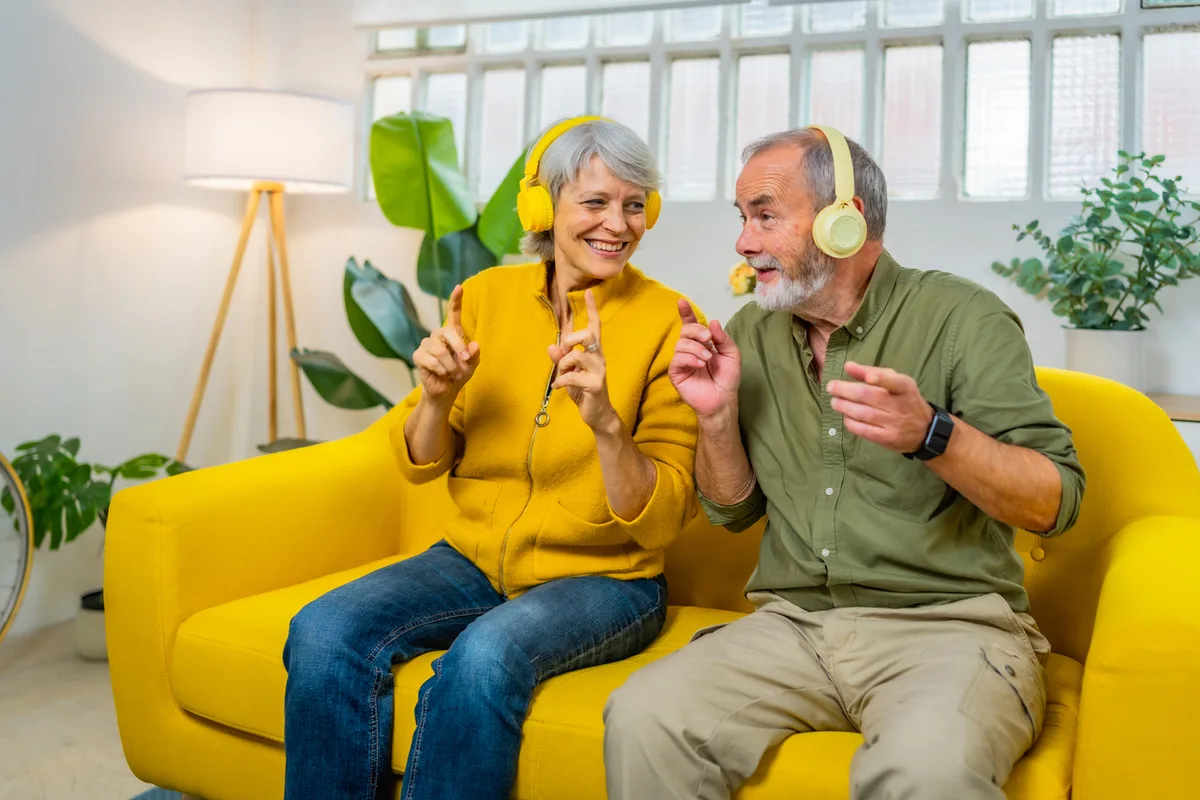
Music and the aging brain are more connected than most people realize. For older adults, especially those living with Alzheimer’s or other forms of dementia, music can do more than entertain. It can help regulate mood, bring back memories, and even spark a connection when words are hard to find.
At Carefield Pleasanton, music plays an important role in our daily routines. We don’t just use it as background sound. We use it intentionally, because research continues to show how music activates parts of the brain that remain intact, even as other functions decline with age.
We see this play out in real time: a resident who rarely speaks suddenly begins to hum along. Another clap to the rhythm. Some sit quietly, visibly more relaxed than they were a moment before. These aren’t isolated moments. They’re signs of something more profound, a connection that music can still reach.
Why Music Affects the Brain Differently as We Age
A study by Oxford University highlighted that auditory memory in aging is surprisingly resilient. The brain’s music-processing centers, especially those tied to emotion, long-term memory, and rhythm, often remain active well into older adulthood, even in people living with cognitive decline.
This means that even if someone has trouble recalling names or following a conversation, a familiar song can still light up those deeply embedded pathways. Musical memory is stored in parts of the brain that are less affected by conditions like Alzheimer’s.
In simpler terms: music goes where words can’t.
Research shows music can:
- Calm anxiety and reduce agitation
- Trigger facial expressions, movement, and recognition
- Support both verbal and non-verbal communication through music
- Offer comfort and security through familiarity
Even in advanced stages of dementia, residents may react to music with subtle cues, tapping their foot, humming, or relaxing their shoulders. These small reactions give us a window into how music still reaches them.
What Science Tells Us About Memory and Music
We often talk with families who are unsure how to connect with their loved one, especially when memory loss makes conversations difficult. This is where music becomes more than a tool. It becomes a bridge.
Studies from Northwestern Medicine, the Alzheimer’s Association, and other leading organizations have shown that music recall in dementia taps into emotional memory, especially when the music comes from someone’s early life. That’s usually between the ages of 15 and 25.
These years are often filled with powerful emotional milestones: graduations, weddings, family traditions, personal triumphs, or challenges. Music from that time tends to stick long after names or dates fade.
In this musical intervention study, researchers showed how music can bypass damaged cognitive pathways and activate deep emotional memory. This explains why a resident might not remember a conversation from earlier today but will start singing every word of a song from their twenties.
At Carefield Pleasanton, we rely on this science every day, not in a clinical way, but in a human one. It’s part of how we structure our memory care approach.
Music as a Daily Tool at Carefield Pleasanton
Scientific findings are most powerful when they improve daily life. In our memory care program, we use music as both a tool for comfort and a way to foster meaningful engagement.
Here’s how music appears across our day:
- Morning routines often begin with upbeat songs that feel familiar.
- Transition times, such as moving to meals or rest periods, may include soft instrumental music to reduce confusion or anxiety.
- Group activities like sing-alongs or seated movement classes often include favorite classics from our residents’ younger years.
- Quiet, personalized moments often include headphones and playlists built with family input.
We also encourage families to contribute to the experience by helping build playlists. In fact, we’ve written a guide on creating a personalized music playlist that includes practical tips, song suggestions, and instructions on observing your loved one’s reactions.
Caregivers don’t need a music background. You need to remember what your loved one enjoyed, and how that music made them feel.
More Than Memories: The Emotional Response to Music
Music doesn’t just trigger memory. It supports emotional regulation, especially in seniors living with dementia.
Even when a person can’t say how they’re feeling, their body remembers. This is what scientists call emotion and memory processing, the way music links feelings to sound. A love song, a lullaby, or a church hymn can bring a sense of peace, recognition, or even joy.
Songs from early adulthood, those formative years, are often tied to:
- A first dance
- A favorite radio show
- A holiday tradition
- Cultural celebrations
- Religious practices
Hearing these songs again can reduce restlessness and reconnect seniors with their past. It’s not just about nostalgia. It’s about helping someone feel seen, grounded, and safe.
How Families Can Use Music at Home
One of the best parts about using music in dementia care is its accessibility. You don’t need any fancy tools or tech to make it work. Just attention, and a little time.
Here are a few things you can try during visits or at home:
- Pick songs from your loved one’s teens or twenties: think Elvis, Nat King Cole, Frank Sinatra, or Motown
- Avoid overstimulation: no fast-paced pop or complex jazz
- Play music during moments of calm: early afternoon is often ideal
- Observe reactions: look for body language: a smile, foot tapping, or calmness
- Use music for transitions: putting on a song before mealtimes can help create structure
Even short listening sessions (10 to 15 minutes) can be meaningful. And if you’re unsure how to start, our care team is always happy to help families build a simple routine.
Why Music Belongs in Every Memory Care Plan
Music may not fix memory loss, but it does something just as important: it makes today better.
In memory care, our goal isn’t just safety. It’s emotional connection, dignity, and presence. Music gives us a non-verbal way to offer all three.
Music Therapy:
- Calms, without medication
- Engages, without instruction
- Connects, without pressure
And it allows residents to feel more like themselves, even if they can’t explain it. That’s the kind of care that matters most.
When You’re Exploring Memory Care in Pleasanton, CA
If you’re caring for someone living with dementia, and music is something you’ve seen spark emotion or comfort, we understand why you’d want that built into their care.
At Carefield Pleasanton, music isn’t a program; it’s part of our environment. From the rhythm of the day to quiet one-on-one moments, music helps us meet people where they are.
When families visit our community, we’re happy to show them how music fits into life here. We’ll walk them through our routines, explain how we use research in daily care, and help them decide if this approach feels right for their loved one.
If you’re looking into memory care in Pleasanton, CA, we’d be glad to show you what we do, and why the small things, like a familiar song, are often the most meaningful.