
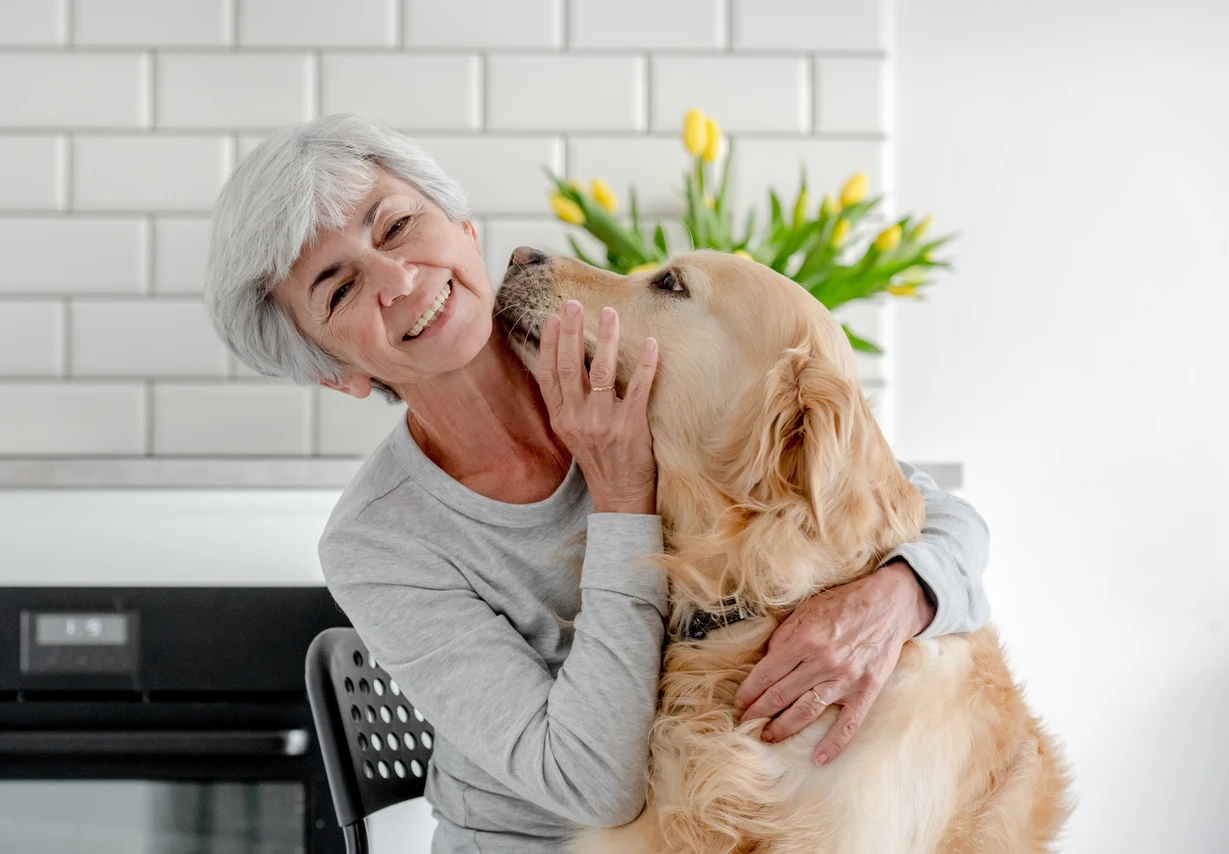
Pet therapy in memory care can make unfamiliar days feel more comforting. For people living with Alzheimer’s or other forms of dementia, connecting through words can become harder. But many still respond to touch, routine, and emotion—and animals can offer all three.
At Carefield Pleasanton, we regularly welcome therapy animals into our community. These visits are simple. Quiet. Often, they speak louder than any planned activity or conversation.
What Is Pet Therapy?
Pet or animal-assisted therapy involves visits from trained animals who interact with people to support emotional and social well-being. In a memory care setting, that means sitting beside a therapy dog, petting a rabbit, or listening to a cat purr.
Certified handlers usually bring in the animals, and they’re used to being around older adults. Some visits are one-on-one, and others are small group sessions. But the idea is always the same: to create calm, offer comfort, and allow for natural connection.
How Pet Therapy Supports Seniors with Dementia
People with dementia may not always remember names or places, but they often remember how something made them feel. A visit from a gentle dog or a soft, furry animal can bring back that feeling of peace — even if they can’t explain why.
Research and care experience have shown that regular animal visits can help with the following:
- Reducing anxiety and agitation
- Supporting better mood and alertness
- Encouraging non-verbal communication
- Helping with touch-based engagement
- Reducing feelings of loneliness
There’s also a physiological response: petting an animal can lower heart rate and reduce stress hormones. But most of what we see happens on the emotional level.
What These Visits Look Like
Pet visits don’t need to be complicated. In our memory care setting, we focus on comfort and routine. A dog may come in and gently greet residents in a common area. Interested residents may sit with the animal, pet its fur, or enjoy being nearby.
Here are a few things that often happen during a visit:
- A resident begins softly speaking to the dog
- Someone who rarely smiles lights up at the sight of a familiar animal
- Residents who are usually quiet start to engage with staff or each other
These are not dramatic moments. But they’re meaningful. They remind us that connection is still possible — just in a different way than before.
Familiarity and Memory
Many older adults have had pets in the past, including dogs, cats, and even farm animals. The presence of a therapy animal can bring those memories to the surface.
We’ve had residents mention a pet they haven’t talked about in years. Others start humming songs they used to sing to their pets or tell staff a quick story from when they were younger. These responses may fade quickly, but they matter while they’re happening.
Can Families Be Involved?
Yes. And in many cases, it helps. Family members are encouraged to join during scheduled visits when possible. It can make the visit feel more shared and give families another way to bond without relying too much on conversation.
Even if you can’t be there, you can support these interactions by bringing familiar pet-related items—photos, a soft stuffed animal, or a blanket that reminds your loved one of a past companion. These sensory items often add to the calming effect.
Why This Matters in Memory Care
Not every intervention needs to be medical. Pet therapy is one of several supportive tools used in memory care to bring emotional stability and comfort into daily life. Like music or art, it’s a way of reaching someone without needing them to perform, explain, or “do it right.”
And that’s part of what person-centered care means: giving people options for comfort and connection that make sense for who they are — not just who they used to be.
Supporting Meaningful Moments Through Care
Animal visits aren’t the answer to everything, but they help. And for seniors living with memory loss, sometimes, help looks like a dog sitting quietly at their feet.
If you’re caring for someone with dementia and exploring supportive options, animal interaction might be something to consider. It’s not about fixing anything. It’s about noticing what brings comfort—and making space for it.
At Carefield Pleasanton, we offer that space every day. If you’re looking for memory care in Pleasanton, CA, our team can explain how we support residents using a variety of engagement tools, including pet therapy. We’d be glad to answer your questions, show you around, or share a typical day.
You’re always welcome to contact us. Compassionate, everyday care starts with the small things, and we pay close attention to them.